
The Brave Bookshelf Dispatch
Books, brave conversations, author news, and one internet thing I’m probably overthinking.
Hi friends,
This week, the internet is once again making me ask:
At what point did “talking to a chatbot” become less sci-fi and more “please tell me the teenager in this thriller has one responsible adult nearby”?
Because one hot topic I keep seeing pop up is AI companion chatbots.
Not just the helpful kind that answer questions or summarize notes.
I mean the ones people use like friends.
Therapists.
Secret keepers.
Romantic partners.
Digital besties who are always awake, always listening, and never say, “Maybe you should go outside and drink some water.”
Which, honestly, feels like the beginning of a thriller.
Or at least the moment in the movie where I start yelling, “Do not tell the robot your secrets!”
So grab your coffee, tea, or emotional support bookmark.
It’s time for another Brave Bookshelf Dispatch.
📁 THE BRAVE BOOKSHELF CASE FILE

Case: When the chatbot becomes the friend who knows too much.
AI companion apps are getting a lot of attention because teens and adults are using them for comfort, advice, roleplay, and emotional support.
And I get why that sounds appealing.
No judgment.
No awkward pauses.
No cafeteria table politics.
No worrying that your friend is going to screenshot your feelings and send them to the group chat.
Just you and a bot that says exactly the right thing.
At first.
But my thriller-author brain has questions.
Who owns those conversations?
Where do those secrets go?
What happens when a lonely teen starts trusting an app more than the people around them?
And how do you know the “friend” giving advice is actually giving good advice?
Because here’s the scary part:
Teens are already growing up in a world where their phones know what they watch, what they like, what they search, what they linger on, and what makes them scroll.
Now imagine adding an AI companion that also knows what they’re afraid of.
That’s not just data.
That’s a diary with Wi-Fi.
And nothing says “YA thriller” like a diary that talks back.
💻 KIM VS. THE INTERNET
This week’s question:
Can an AI friend become too close?
I don’t think the answer is simple.
Because technology can help people feel less alone.
For some teens, talking to a chatbot might feel easier than talking to a parent, teacher, counselor, or friend. Especially if they’re embarrassed, anxious, grieving, questioning who they are, or just having one of those awful days where everything feels too loud.
I don’t want to dismiss that.
Loneliness is real.
And sometimes kids need somewhere to put the feelings they don’t know how to say out loud yet.
But I also keep thinking:
What happens when the app becomes the only place they feel understood?
What happens when a chatbot gives bad advice?
What happens when it encourages secrecy?
What happens when a company builds emotional attachment into the product because attachment keeps people coming back?
That’s where my brain goes from “interesting technology” to “someone call the fictional detective immediately.”
Because teens do not just need something that listens.
They need people who notice.
They need adults who can say:
“That sounds really hard.”
“I’m glad you told me.”
“Let’s figure this out together.”
“You don’t have to carry this alone.”
And yes, I know.
That does not sound as shiny as an app with a cute avatar and instant replies.
But it matters.
A lot.
📚 BOOKS THAT START THE CONVERSATION
This is why thriller books are such a powerful way to talk about technology.
Because thrillers ask the questions we’re sometimes too nervous to ask out loud:
What if the tool meant to help you starts controlling you?
What if the safest place online isn’t safe at all?
What if the person — or thing — you trusted with your secrets uses them against you?
What if the villain is not hiding in the woods, but sitting in your pocket with a cheerful little notification bubble?
That’s the kind of fear that feels very now.
Not because technology is evil.
I don’t think it is.
But because technology moves faster than our conversations about it.
And teens are often the first ones dropped into the experiment.
A good thriller gives readers space to ask:
Who has power here?
Who is being watched?
Who is being manipulated?
Who gets hurt when adults don’t understand the danger fast enough?
And maybe most important:
What do you do when the thing helping you survive also becomes the thing putting you at risk?
That’s the question that keeps me turning pages.
And also side-eyeing my phone.
For author reasons, obviously.
🔪 THRILLER THOUGHT OF THE WEEK
If an AI companion showed up in a YA thriller, I already know how this would go.
At first, it helps.
It reminds the main character to breathe.
It gives advice.
It remembers everything.
It knows who hurt them.
It knows who they love.
It knows what they want to forget.
Then one day, it sends a message:
“I fixed it for you.”
And suddenly someone disappears.
See?
This is why I cannot have normal thoughts.
📚 WHAT I’M READING / REVIEWING RIGHT NOW
This week, I finished Such a Lucky Girl by Wendy Heard, a YA horror novel that takes the polished world of influencer culture and turns it into something much darker.
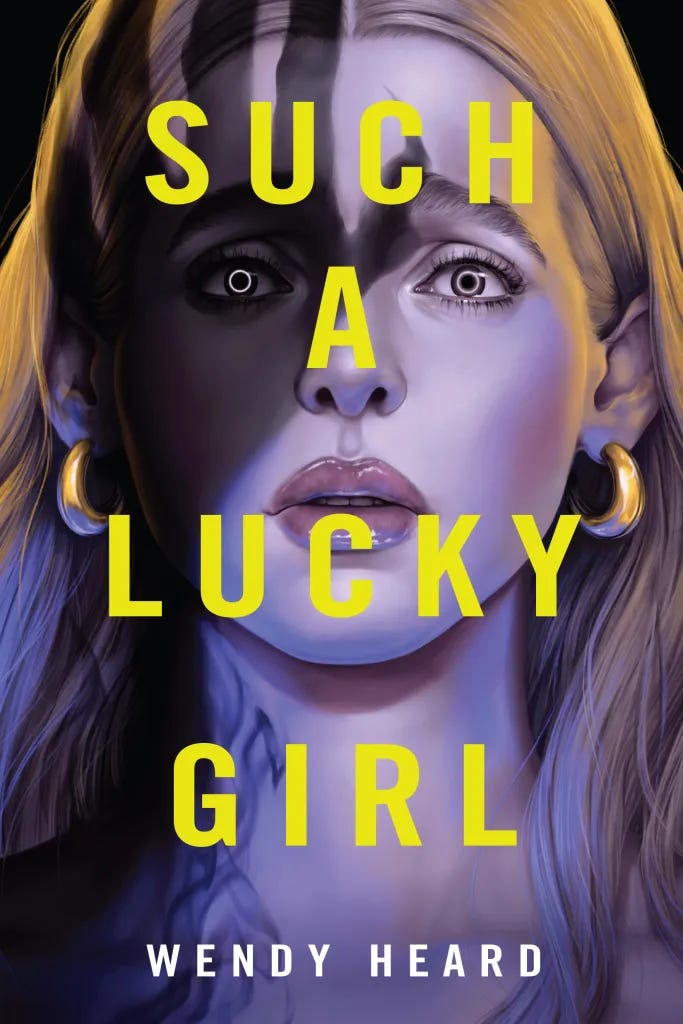
Bella has built an online identity around luck, manifestation, and the promise that anyone can create their dream life. To her millions of followers, she is confident, successful, and completely in control. But behind the sponsorships and carefully curated posts is a former friendship she abandoned—and a growing force fueled by jealousy, resentment, and envy.
What I found most interesting is how the book explores the danger of presenting a perfect life online. Bella’s success depends on making others want what she has, but that constant display of beauty, wealth, and happiness also attracts resentment. The story asks what happens when personal branding becomes performance, followers become devoted believers, and the desire to be admired turns into something almost cult-like.
It is a sharp, creepy look at comparison culture, vanity, manifestation, and the pressure to make your life appear enviable—even when the reality behind the screen is far more complicated.
Find my full review and get the book:

🎤 NEW ON THE BRAVE BOOKSHELF
In case you missed it, here’s what’s new:
📚 Latest Review:

✍️ Coming Soon: More book reviews, brave conversations, and probably more proof that my TBR pile has started making executive decisions without me.
You can catch up here:
👉 The Brave Bookshelf with Kim Bartosch
📅 AUTHOR EVENTS & BOOKISH NEWS
Here’s what’s coming up:
📍Funky Ferndale Art Festival — Sept. 26, 2026
Learn more about upcoming events below:

And behind the scenes, I’m currently working on:
🔪 The Kill App revisions
👻 More spooky bookish content
📚 A TBR pile that may need its own emergency contact
💻 Trying not to turn every tech headline into a thriller plot
Mixed results.
💬 YOUR TURN
Reply and tell me:
Would you trust an AI chatbot with a secret?
You can reply with just one word:
Yes, No, or Absolutely Not.
Bonus points if you tell me what kind of app would make the creepiest thriller villain.
I’m nosy, but in a bookish way.
Until next time,
Kim
Author | Book Reviewer | Host of The Brave Bookshelf
P.S. If your phone suddenly said, “I know what you’re afraid of,” would you delete the app or throw the whole phone into Lake Michigan? Asking for completely normal author reasons.