
Some books ease you into their world. The Southern Sorority of Superstitious Witches by Katie Ortiz had me hooked from the first page—and feeling very grateful I wasn’t a woman trying to get an education in 1870s Alabama. Published by Alcove Press, this Southern Gothic novel combines folklore, witchcraft, and three women’s determination to claim a future for themselves. So far, it has given me plenty to love, a few questions, and several moments when I wanted to reach through the pages and give certain men a piece of my mind.
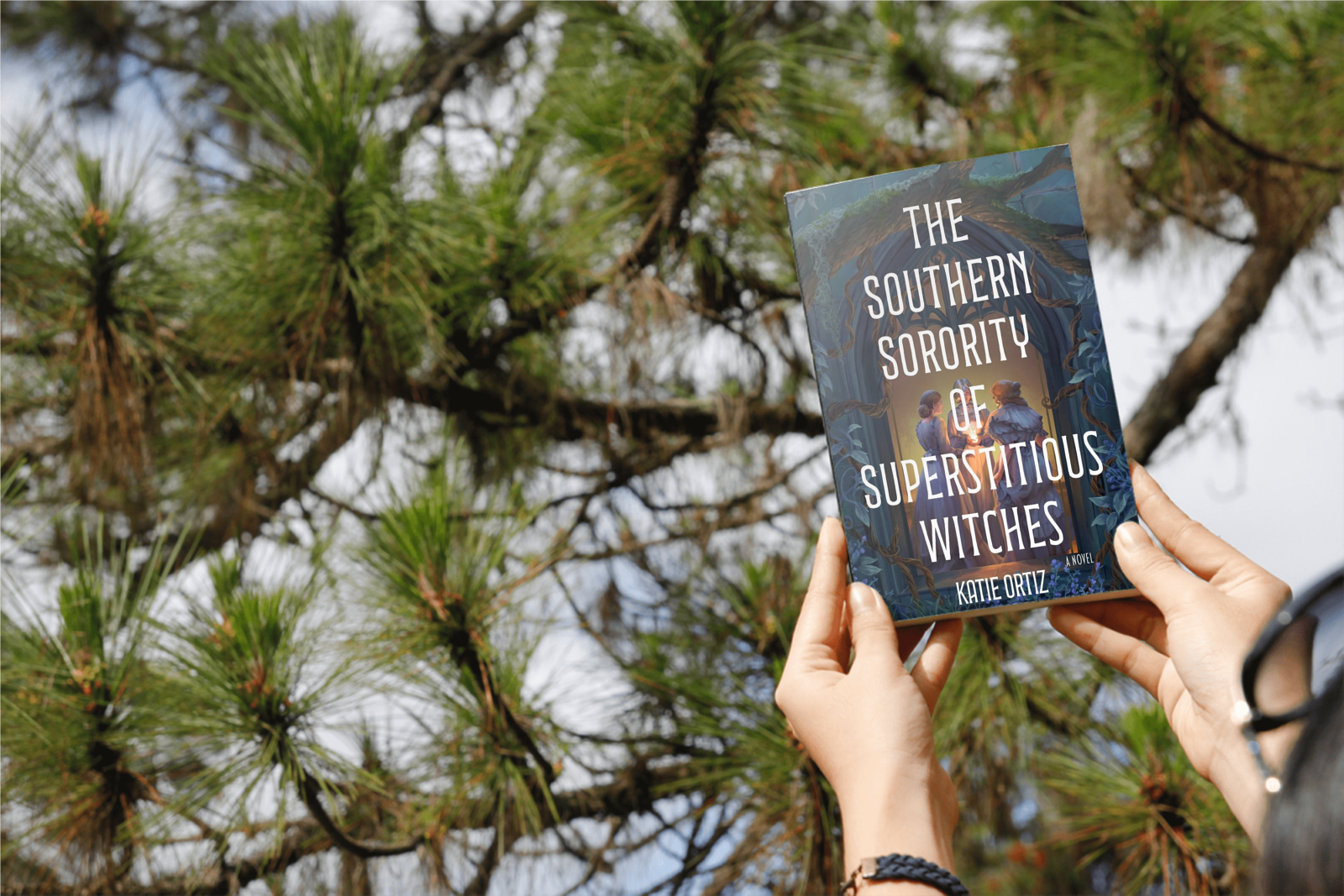
Thank you to the author and the publisher for the book and my honest review.
This book tour is sponsored by Toppling Stacks Tours.
Lucille, Catherine, and Victoria arrive at a prestigious Alabama university for a trial semester that could open the door to higher education for women across the state. Each has her own reason for accepting. Lucille wants freedom from her controlling father and distance from a first love who betrayed her. Catherine hopes to escape an arranged marriage intended to suppress her attraction to women. Victoria carries guilt over the death of a fellow mill worker and wants a way forward.
Their opportunity comes with an awful catch: they must succeed in an environment where some male students are actively trying to make them fail. As the harassment escalates, the women form a coven disguised as a sorority and turn to Southern folk magic to fight back. The premise also promises a darker force working against them, making their place at the university even more precarious.
What has stood out most to me is how thoroughly Ortiz makes these women’s circumstances feel oppressive. Their treatment is horrible, and the scenes of bullying and assault are difficult to read. The cruelty made me think about how much freedom I take for granted. These women are trying to learn, yet even that becomes something they must defend.
The historical atmosphere and language have also impressed me. I can’t confirm the accuracy of every detail, and I don’t yet know how much of the university experiment draws on actual history. What I can say is that Ortiz has created a setting that feels convincing to me as a reader. The expectations placed on these women shape their choices, their fears, and the risks they take. That sense of restriction gives their desire for independence real weight.
Lucille is a particular favorite. I love her spunk, especially considering the cruelty she faces from her father. Her personality made me root for her early on, and I want to see her find the freedom she deserves. There is something especially satisfying about a character whose spirit keeps showing through despite the people trying to control her.
Catherine has won me over, too. I love her sweet demeanor and her desire to change things for herself and the other women. Watching her respond to their mistreatment makes me care about what happens to her. Her father’s financial involvement in the school and program adds another detail to consider, especially alongside the different ways the enrolled women are treated.
Victoria’s guilt gives her story a different emotional starting point. Together, the three main characters arrive with distinct burdens, and I appreciate that Ortiz takes time to introduce us to each of them. Their individual circumstances help me understand why this opportunity matters so much.
One of my favorite things to think about is the connection between the women and the magical elements of The spirit, The sacrifice, and The superstition. As I understand the book’s witchcraft so far, those elements are involved in making a spell work. My current interpretation is that Catherine brings the superstition, Lucille the spirit, and Victoria the sacrifice. I could be wrong by the ending, but I love considering how their personalities and experiences might fit together within the magic.
And when the spellcasting against their tormentors finally begins? Yes, please. After watching these men bully and hurt these women, I was ready for them to face some consequences. My main pacing complaint is that I wish this happened sooner. The magical retaliation arrives around the halfway point, and I had been eagerly waiting for it. Still, I appreciate the character development that comes first; knowing the women makes those moments more satisfying.
My other reservation concerns the trial semester’s admissions premise. Two of the ten women enrolled are women of color, and I found myself wondering how their inclusion would have been arranged at this particular university in post–Civil War Alabama. Given the setting, I wanted more explanation of the institution’s decision and the barriers involved. I’m only halfway through, though, so that explanation may still be ahead. Ortiz does portray these women receiving even worse treatment than their white classmates, which makes the question more significant for me.
So far, this is a compelling spooky-season read with characters I care about and magic I’m eager to see develop. The harassment and violence make it a heavy read in places, but the women’s growing resistance keeps me turning pages. My current rating is 4.6 out of 5 stars, and I’m looking forward to discovering where their sisterhood—and their spells—takes them next.
Content warnings: Sexism, discrimination, homophobia, blood, death, murder, self-harm for witchcraft purposes, physical assault, sexual assault, psychological assault, and a graphic force-feeding scene.
My rating so far: ⭐⭐⭐⭐✨ 4.6/5 stars
Reading update: I’m halfway through this book, so these are my impressions so far. I don’t think my rating will change, but it may change once I reach the ending. Because sometimes a great ending makes it a 5-star read. 😊
About the book:
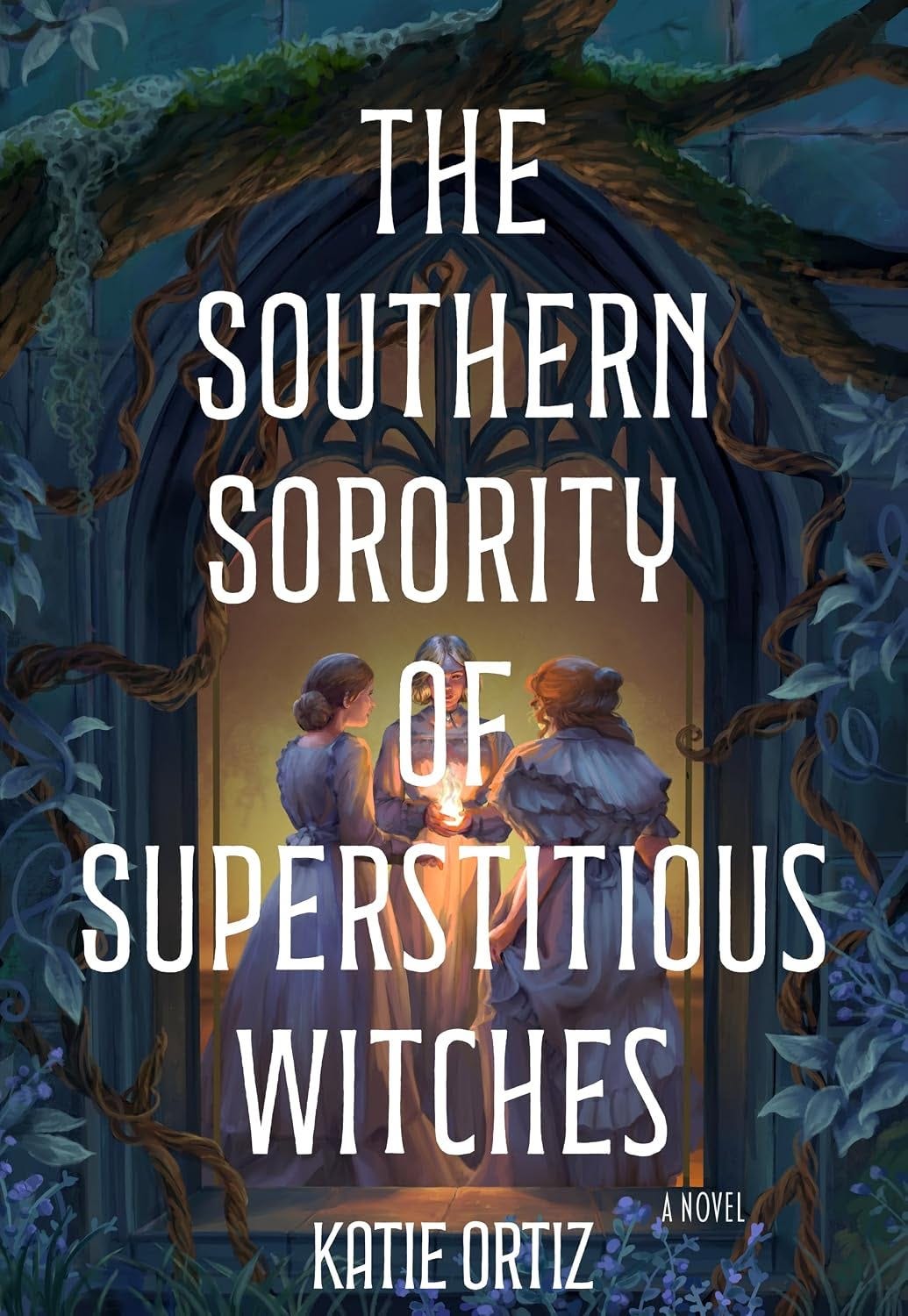
Genre: Adult Historical Fiction
Publishing date: October 6, 2026
Goodreads | Amazon | Barnes & Noble | IndieBound
Rep: Sapphic, Trans, LGBT+
Synopsis:
In this spellbinding Southern Gothic novel, three women weave together old Southern folklore and magic to fight sexism and educational discrimination in post-Civil War Alabama, perfect for fans of Hester Fox and Louisa Morgan.
When Lucille, Catherine, and Victoria are invited to participate in a trial semester for women at Alabama’s most prestigious university, they each have their own reasons for accepting. Lucille wants freedom from both her father’s control and reminders of her traitorous first love. Catherine wants to escape an arranged marriage meant to halt her attraction to women. And Victoria wants to run from the guilt that haunts her after the death of one of her fellow mill girls.
The trial semester will determine whether or not women across the state will be allowed to attend other universities. But the enrolled women quickly learn that success is not guaranteed, and some of their male cohorts are determined to see them fail. When the men’s pranks go too far, Lucille, Catherine, and Victoria form a coven under the guise of a sorority and call upon witchcraft steeped in the traditions of southern folklore to fight back.
As they gather their fellow witches, they discover there is something darker at work at the university, a force that is determined to expel all the women at the university, and they’ll need all the allies they can get if they want to succeed.
For fans of Witchcraft for Wayward Girls and Weyward, this historical speculative novel explores the darker side of human nature and the ways in which women navigate—and survive—oppressive, male-dominated societies.
Meet the author:

Katie Ortiz is a writer, teacher, wife, feminist, and cat mom from Alabama. She’s a member of the Alabama Historical Association and writes accessible historical fiction with a speculative twist. Her writing often explores the darker sides of human nature and the ways in which women navigate and survive in oppressive, male-dominated societies. She attended the 2023, 2024, and 2025 Alabama Writing Day Workshops and the 2023 Atlanta Writers Conference. When she’s not writing at her favorite local coffee shop, she fights for the right to education every day as a public school teacher, reads witchy books, or takes her two cats on walks.