
The Brave Bookshelf Dispatch
Books, brave conversations, author news, writer advice, and one internet thing I’m probably overthinking.
Hi bookish friends, 📚
Welcome back to The Brave Bookshelf Dispatch — where we talk about books, brave conversations, spooky little questions, and the kind of fictional choices that make us yell, “Absolutely not!” while knowing full well we’d probably keep reading anyway.
This week, we’re talking about creepy phone calls, writer tricks, and a YA book that starts with one very threatening message:
WE KNOW WHO YOU ARE AND WHERE YOU ARE. STOP DIGGING.
So, naturally, today’s survival question is personal.
Because in a thriller, one phone call after dark is bad enough.
But one phone call about …(you know who 😅)?
So grab your coffee, tea, or emotional support bookmark.
It’s time for another Brave Bookshelf Dispatch.
Why I love this Setup of a Creepy Call
There’s a reason creepy phone calls keep showing up in thrillers and horror stories.
They work.
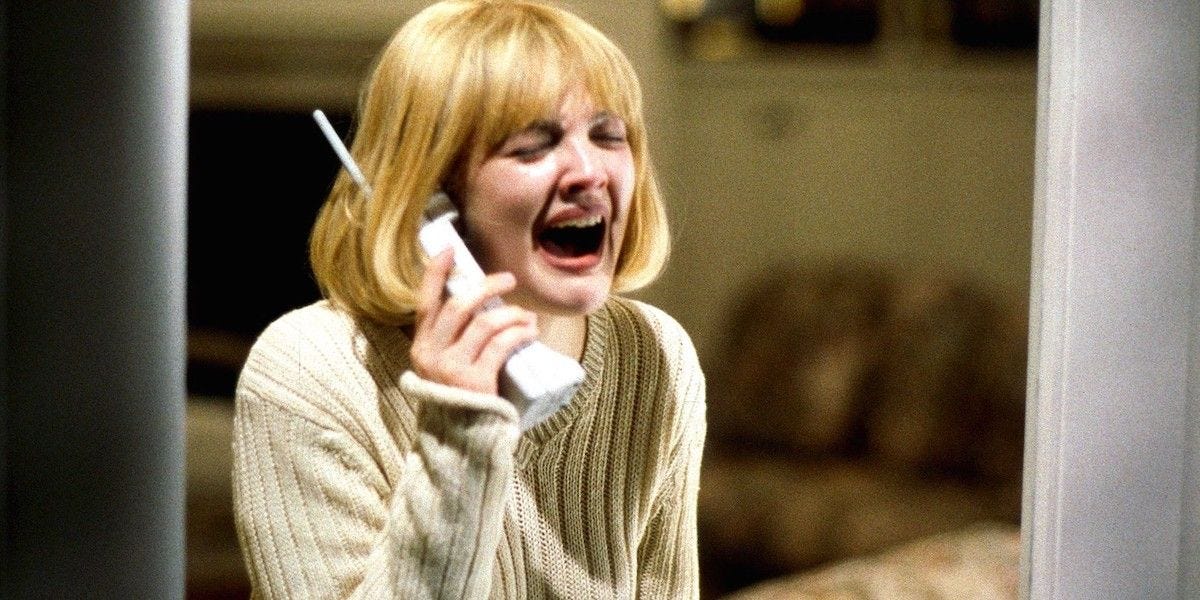
Think about Scream.
That opening phone call is terrifying because it starts so casually. A girl is home alone. The phone rings. A stranger asks about scary movies.
At first, it almost feels playful.
Then the tone shifts.
The caller knows too much.
The house suddenly feels too quiet.
The phone, something ordinary, becomes a threat.
That’s what makes it brilliant.
A creepy call takes something familiar and makes it unsafe.
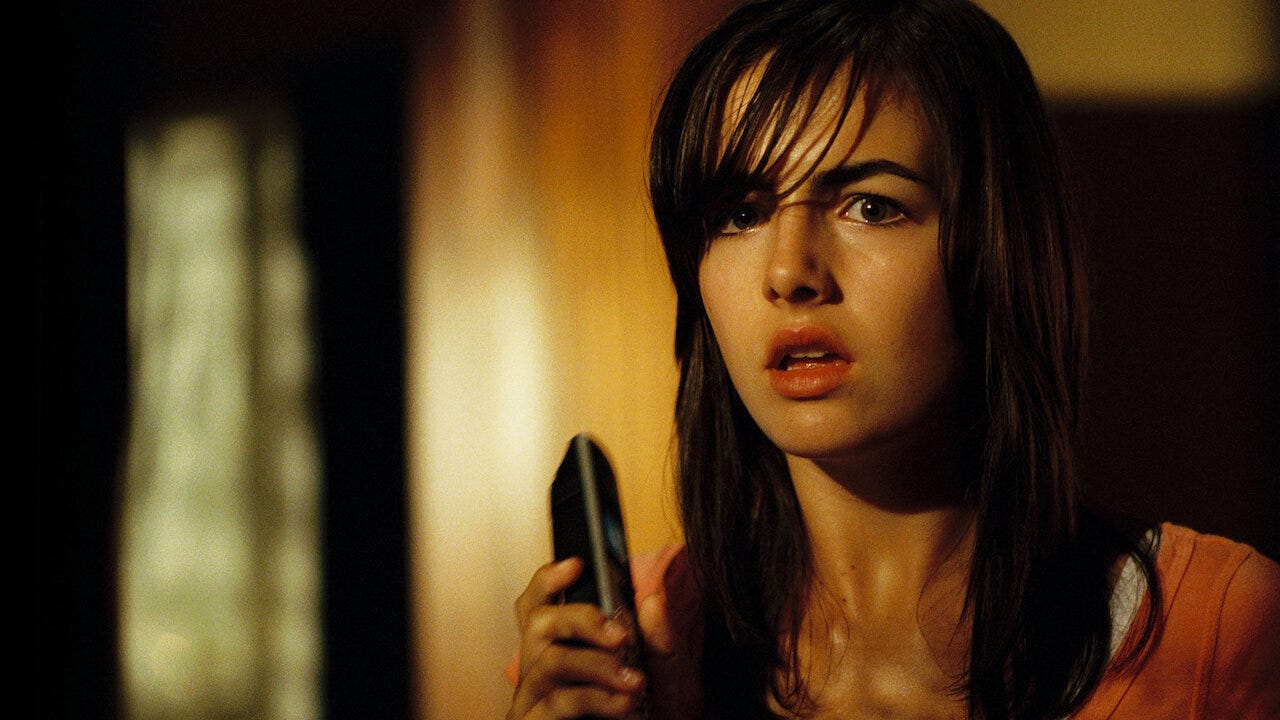
We’ve also seen this in stories like When a Stranger Calls, where the terrifying question becomes whether the danger is outside the house… or already inside.
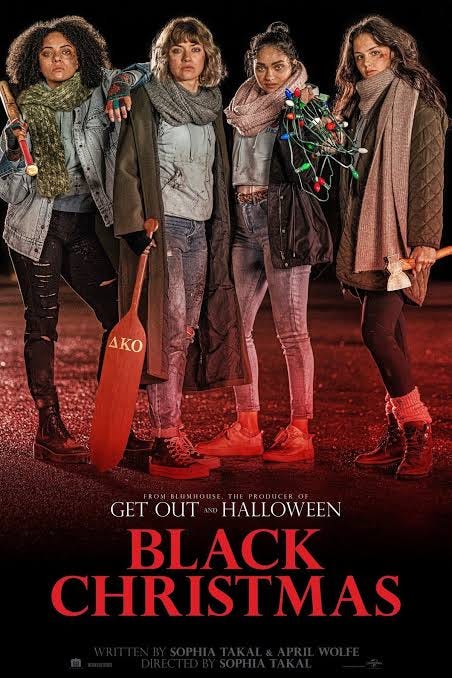
Or Black Christmas, where disturbing phone calls turn a safe, familiar space into something watched, invaded, and deeply unsettling.
Thriller writers use creepy calls because they create tension fast.
There’s no long setup needed.
The phone rings.
The character answers.
And suddenly the story has a pulse.
A creepy call works because it gives the villain control. The caller decides what to reveal, what to hide, when to pause, and when to hang up. The main character is stuck reacting in real time.
It also creates helplessness.
You can hear the voice, but you can’t see the person.
Are they nearby?
Are they lying?
Are they watching?
Do they know something they shouldn’t?
That uncertainty is gold for thriller writers.
The best creepy calls also make the danger personal.
It’s one thing for a stranger to say, “I’m watching you.”
It’s another for them to say, “I know where your sister is.”
Now the main character has to make an impossible choice. Hang up and maybe lose the only clue? Keep talking and risk being manipulated? Tell someone and risk making things worse?
That’s where suspense lives.
Not just in the call itself, but in the decision that follows.
So the next time you’re writing a thriller scene and want to raise the tension, try taking something ordinary — a phone call, a text, a voicemail, a doorbell, a notification — and ask:
What would make this feel wrong?
Because sometimes the scariest moment is not a monster jumping out of the dark.
Sometimes it’s your phone lighting up after midnight.
And you already know you shouldn’t answer.
YA Thrillers to Study for Creepy Messages, Calls, and Clues 📚📱
If you want to study how YA thriller writers use phone calls, texts, anonymous messages, and unsettling clues, here are a few popular YA books worth looking at:
A Good Girl’s Guide to Murder by Holly Jackson
A great example of how interviews, messages, research, and hidden details can pull a character deeper into danger. Pip keeps digging, and every answer creates a bigger question.
One of Us Is Lying by Karen M. McManus
This one is perfect for studying secrets, gossip, and how public information can destroy someone’s life. The tension comes from the fear of exposure.
Ace of Spades by Faridah Àbíké-Íyímídé
A strong example of anonymous threats and messages being used to control, expose, and terrify characters. The unknown sender creates constant pressure.
The Naturals by Jennifer Lynn Barnes
Great for studying teen investigators, profiling, danger, and how clues can feel personal. The mystery grows because the characters’ skills pull them closer to the threat.
Truly Devious by Maureen Johnson
This is a good one for writers who like old crimes, strange messages, school settings, and mysteries that connect the past with the present.
I Know What You Did Last Summer by Lois Duncan
An older YA thriller, but still a classic example of threatening messages. The fear comes from one chilling idea: someone knows what you did.
Sadie by Courtney Summers
This one uses interviews, investigation, and missing-person tension in a powerful way. It’s a great study in how voice, absence, and unanswered questions can build dread.
People Like Us by Dana Mele
A good pick for private-school secrets, anonymous clues, and characters being pushed into dangerous choices.
Tips for Using Creepy Calls, Texts, or Messages in Your Own Thriller ✍️📞
A creepy call, text, or notification works best when it does more than scare the character.
It should change the story.
Here are a few ways thriller writers can use them:
1. Make the ordinary feel unsafe
The scariest part of a creepy call is that phones are normal.
We use them every day.
So when a phone lights up at midnight, or a text arrives from an unknown number, the fear comes from something familiar turning strange.
Try this:
Instead of writing, “The room was scary,” make the phone do something unsettling.
A text from a number that should not exist.
A voicemail with no words, only breathing.
A message that mentions something the character never told anyone.
2. Give the caller information they should not have
This is what makes the reader lean in.
A creepy message becomes much scarier when it is specific.
Not:
I’m watching you.
But:
You always leave your bedroom light on when you’re scared.
Or:
Ask your sister what she hid under the floorboard.
Specific details make the threat feel personal.
3. Use silence
Sometimes the scariest part of a call is not what the caller says.
It’s the pause.
The breathing.
The click before they hang up.
The fact that the character says, “Hello?” three times and no one answers.
Silence gives the reader room to imagine the worst.
And readers are very good at imagining the worst.
Rude of us, honestly.
4. Make the message force a choice
A creepy text should push the character into action.
For example:
Tell anyone, and your sister disappears for good.
Now the character has a choice:
Tell an adult?
Keep the secret?
Record the call?
Follow the clue?
Trust the voice?
That choice creates tension.
The best thriller messages do not just reveal information.
They trap the character between bad options.
5. Let the character react emotionally
A creepy call is not only about the plot.
It is about what the call does to the character.
Do they freeze?
Lie?
Panic?
Pretend they are fine?
Call someone they trust?
Make a terrible decision because they are scared?
That reaction tells us who they are.
A brave character might answer.
A careful character might record.
A guilty character might hide the call.
A lonely character might keep listening because the voice knows something they desperately need.
6. Don’t explain too much too soon
The unknown is doing a lot of work.
The second the reader knows exactly who is calling and why, some of the fear disappears.
So let the mystery breathe.
Reveal one piece at a time.
A strange number.
A distorted voice.
A personal detail.
A warning.
A clue.
A lie.
Then let the reader wonder which part is true.
7. Connect the message to the heart of the story
The creepiest messages are not random.
They hit the character where it hurts.
For this newsletter’s scenario, the line works because it is about a sister:
“I know where your sister is.”
That is instantly personal.
The call is not just scary.
It is emotional.
That is the sweet spot for thrillers: when the danger outside the character connects to the fear already inside them.
📚What I’m Reading
This week I’m sharing “Don’t Print This” by Monica Chin. No creepy calls but most definitely a creepy message:
WE KNOW WHO YOU ARE AND WHERE YOU ARE. STOP DIGGING.
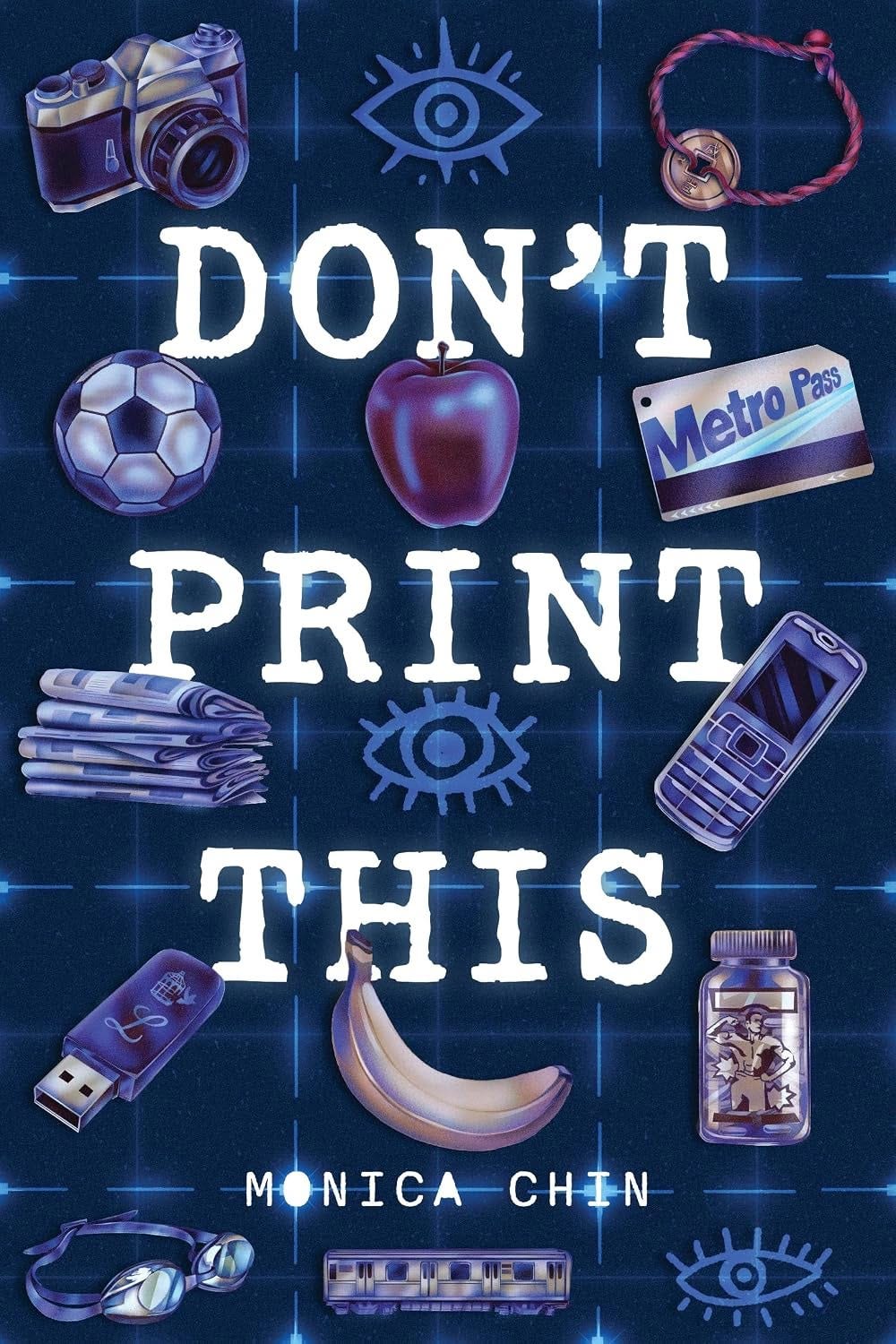
Freshman year, Ace Li kissed his best friend, Akash Patel. The next day, Akash moved away without a word―and Ace was so brokenhearted he stopped eating.
It took years for Ace to recover, but he’s finally stable again. Ace drinks his protein shakes, swims every morning, and might even win the debate competition this year. He’s good. He’s forgotten that kiss―at least, that’s what he tells himself. Then Ace hears the news: Akash is back.
Akash has returned because his mother, the world-famous investigative journalist Radhika Malhotra, is missing, and she was last seen in this town. Ace tries to stay away, but the second he sees Akash, the feelings he’s suppressed bubble back to the surface. Then Ace happens upon some notes―notes about what Akash’s mother was investigating. If he retraces her steps, he might be able to find her. And if he does, maybe Akash will give him another chance.
As Ace follows Radhika’s trail, his stable life begins to crumble. He stops eating, and he starts receiving threatening, anonymous messages. If he goes public with what happened to Radhika and why, his entire town will have to pay the consequences. Winning Akash’s heart might cost Ace everything, but maybe that’s a sacrifice he’s willing to make.Would you answer, block it, or record the call?
I liked this but I really wanted more mystery vs. internal love romancy stuff. But it could just be me. Others may swoon over this one. I give it 3.5 stars.
Read my full review and get the book!

A Writer Challenge
The next time you want to raise tension in a scene, try this:
Take something ordinary — a phone call, a text, a voicemail, a group chat, a notification — and make it feel wrong.
Ask yourself:
What does the message say?
Why does it arrive now?
What does the sender know that they should not know?
What choice does it force the character to make?
What happens if the character ignores it?
Because sometimes the scariest thing in a thriller is not a masked figure in the dark.
Sometimes it is one little buzz from your phone.
And the message:
Answer me. I KNOW what you DID last summer.
Warmly,
Kim
P.S. Do you love my reference to the classic thriller? Thought you would. 😅