
Hi Bookish Friends! 📚🤖
I want to believe I would not take life advice from a suspicious AI chatbot.
I really do.
I would ask sensible questions.
I would check the source.
I would remind myself that no app, bot, or glowing little text box should know more about my life than my own family.
And yet…

If a chatbot gave me one weirdly helpful answer?
Then another?
Then somehow knew exactly what I needed to hear while I was standing in my kitchen, drinking cold coffee, trying to remember if I moved the laundry?
I might keep asking questions.
Just one more.
For research.
Which, as we know, is how the trouble starts.
So today’s question is:
Would you trust the AI chatbot?
Here’s the setup:
A new chatbot app starts making the rounds at school.
At first, everyone treats it like a joke.
Ask it who has a crush on you.
Ask it what grade you’ll get on your math test.
Ask it what your teacher really thinks when the class “forgets” homework.
Harmless, right?
Then the answers get weird.
Not scary at first.
Just… accurate.
It reminds someone to bring an inhaler before gym class.
It tells another student not to take the shortcut behind the auditorium.
It warns someone to delete a post before it ruins their friendship.
Then you try it.
You ask something small:
Should I trust my best friend?
The bot pauses.
Three dots blink.
Then it answers:
No. And you already know why.
Your stomach drops.
Because the bot is wrong.
It has to be wrong.
Right?
Then another message appears:
Ask her what she did last Friday.
So… what do you do?
A) Keep asking questions because now you need answers.
B) Delete the app immediately and pretend you never saw it.
C) Screenshot everything and test the bot with questions only you know.
D) Ask your best friend directly and try not to sound like you’re taking advice from a creepy robot.
Kim’s Very Scientific Thriller Verdict
If you picked A, I understand you.
I worry for you.
But I understand you.
Curiosity is powerful. Unfortunately, in a thriller, curiosity also likes to open locked doors, click strange links, and invite chaos to sit down for coffee.
If you picked B, smart.
You may not solve the mystery, but you also may not become part of the bot’s five-step plan.
If you picked C, excellent detective energy.
Screenshots first. Panic second. Trust nothing with a cute logo.
If you picked D, brave.
Messy, but brave.
Also, please record the conversation in case your best friend says something like, “I can explain,” because that phrase has never helped anyone in a thriller.
What I’m Reading 📚
This week, I’m reading Sisters Alone by Shifa Saltagi Safadi, and I’m giving it 5 stars.
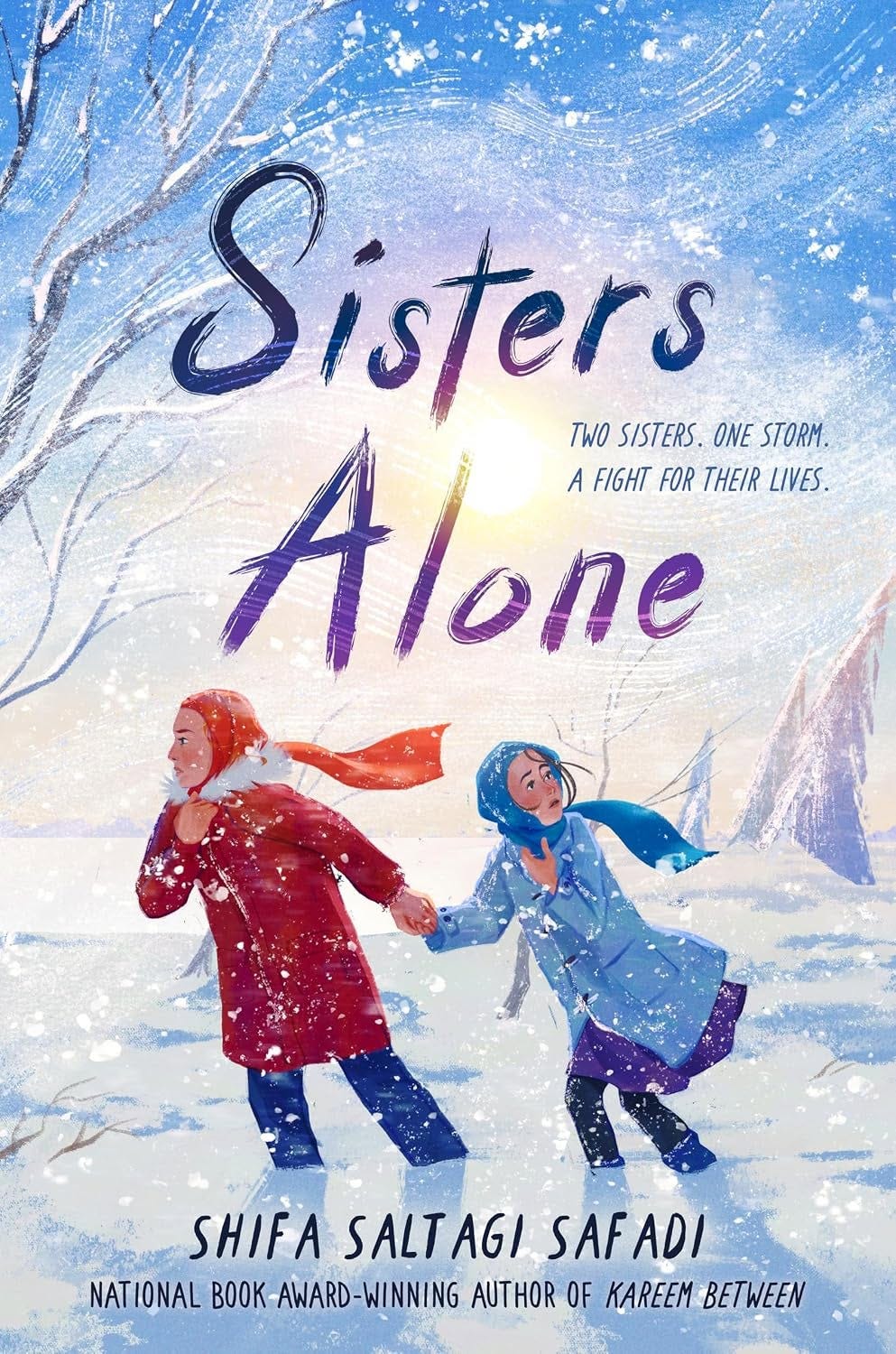
This one is the kind of story that grabs your heart and then traps it in a blizzard.
It follows two sisters, Rama and Leena, who are left alone at their rural home when their father has to travel for work.
Then a sudden blizzard hits.
No power.
No food.
No shelter.
No easy way out.
Just two sisters, one storm, and all the grief, guilt, anger, and fear they’ve been carrying.
Rama is fierce and full of fire, battling intrusive thoughts while trying to keep everything together.
Leena is quiet and numb, still blaming herself for their mother’s death.
And when the storm tears through their house, the sisters have no one to rely on but each other.
I love stories about sisterhood, survival, and the hard, complicated ways people love each other when they’re scared.
Especially when the danger outside forces the truth inside to come out.
You can read my full review here: [INSERT REVIEW LINK]
Content notes: death of a parent, hospitalization, medical content, hypothermia, grief, anxiety, and panic attack.
Rep: Syrian-American, Muslim, Anxiety
Read my full review and get the book 👇

The Kill App Connection with AI Chatbot Scenerio
This is one of the reasons I love writing tech thrillers.
Technology does not have to look scary to be scary.
Sometimes the most dangerous thing is not a monster in the woods.

It is a notification.
A message.
An app that says, “I can help.”
In The Kill App, Rae joins an anonymous support app because she needs somewhere to put all the fear, anger, and survival mode she’s been carrying.
At first, the app feels like a safe place.
Then names from the app start turning up dead.
And Rae realizes the app is not just listening.
It is choosing.
That’s the question that keeps pulling me back to tech thrillers:
When does help become control?
And how do you know when something that feels safe has started watching you too closely?
The Brave Conversation
This kind of story opens up a bigger conversation about trust, privacy, friendship, and how much advice we should take from technology.
Because teens are growing up with tools that can answer questions fast.
Homework questions.
Friendship questions.
Mental health questions.
Questions they may be afraid to ask out loud.
That does not make technology evil.
But it does mean we need to talk about it.
Who do we trust with our secrets?
When should we ask a person instead of a program?
Can advice be useful and still be unsafe?
And what do we do when a tool makes us doubt someone we love?
So now I need to know:
Would you keep asking questions if the answers were actually useful?
Reply with A, B, C, or D and tell me your chatbot survival plan.
No essay required.
Unless you have strong feelings about AI, creepy apps, or friends who suddenly act weird after Friday.
In that case, I absolutely want to know.
Warmly,
Kim
P.S. Next time, we may be talking about whether you’d go to the sleepover. Snacks, secrets, and one game nobody should play.