
Hi Bookish Friends! 📚🕯️
I know what I’m supposed to say.
If you find an old diary hidden inside a wall, you should probably leave it alone.
Call someone.
Take a photo.
Back away slowly.
Maybe don’t read the private thoughts of a person who clearly went through a lot of trouble to hide them inside the actual house.

That would be the mature choice.
The safe choice.
The choice made by someone who does not want to become chapter four of a gothic mystery.
Unfortunately, I am nosy.
If I found an old diary hidden in a wall, I would absolutely open it.
I would tell myself I was only checking the first page.
Then I would read the second page.
Then I would make tea.
Then suddenly it would be 2 a.m., the house would creak, and I’d be whispering, “Wait… why does this sound like my family?”
So today’s question is:
Would you open the old diary?
Here’s the setup:
You’re helping clean out an old family house.
The kind of house with too many closets.
Too many framed photos of relatives who look like they know things.
Too many floorboards that complain when you step on them.
You’re moving an old bookshelf when something slips from a crack in the wall.
A diary.
Small. Dusty. Tied with a faded ribbon.
Obviously suspicious.
The first few pages are harmless.
Weather.
School.
A strange neighbor.
Someone crying at night.
Then the entries get darker.
Someone was watching the house.
Someone disappeared.
Someone in the family lied.
And then you reach the last entry.
It describes something that sounds exactly like what happened to your family.
Same date.
Same room.
Same name.
Then, from somewhere upstairs, you hear a door close.
So… what do you do?
A) Keep reading because the diary clearly wants to be read.
B) Put it back in the wall and pretend you found nothing.
C) Take pictures of every page, then start researching names and dates.
D) Call a family member and ask, “So… anything weird happen in this house?” like a totally normal person.
Kim’s Very Scientific Thriller Verdict
If you picked A, you are brave, curious, and likely cursed.
I respect it.
I do not recommend it.
If you picked B, you may be the smartest person here.
Will the diary leave you alone? Probably not.
But at least you tried.
If you picked C, excellent mystery instincts.
Pictures first. Research second. Panic third. Preferably with snacks.
If you picked D, bold choice.
Family members love being asked vague, terrifying questions about old houses with no warning.
I’m sure that will go well.
Why I Love This Kind of Setup
Old diaries are dangerous in stories because they feel personal.
A diary isn’t just evidence.
It’s a voice.
Someone wrote those words because they couldn’t say them out loud.
Maybe they were scared.
Maybe no one believed them.
Maybe they knew the truth would hurt too many people.
Or maybe they were leaving a warning for whoever came next.
That’s why I love gothic mysteries and family-secret stories.
The house becomes part of the mystery.
The walls know things.
The rooms remember.
The people who came before you are not as gone as everyone wants to believe.
And once you start reading, you can’t unknow what you found.
The Ask the Girl Connection
This is one reason I love ghost stories and old secrets.
In Ask the Girl, the past is not finished.
A girl died long ago.
A family is still living with the damage.
And Lila has to face something terrifying: what if the truth has been waiting for someone to finally ask the right questions?
That’s the part of mysteries that always gets me.
The ghost is scary.
The hidden diary is scary.
The strange noise upstairs is very much not helping.
But the real fear is this:
What if your family story isn’t the whole story?
What if someone was erased from it?
What if the truth has been sitting inside the walls all along?
You can read more about Ask the Girl here:

On a different note…let me move on to a story idea for my next book. 😁
Story Spark: The Red Monster of Sedona 🐪🌵
A few weeks ago, I took a ghost tour in Sedona, Arizona, and heard a folktale that has not left my brain alone since.
Which, as a writer, usually means:
“Oh no. This might become a book.”
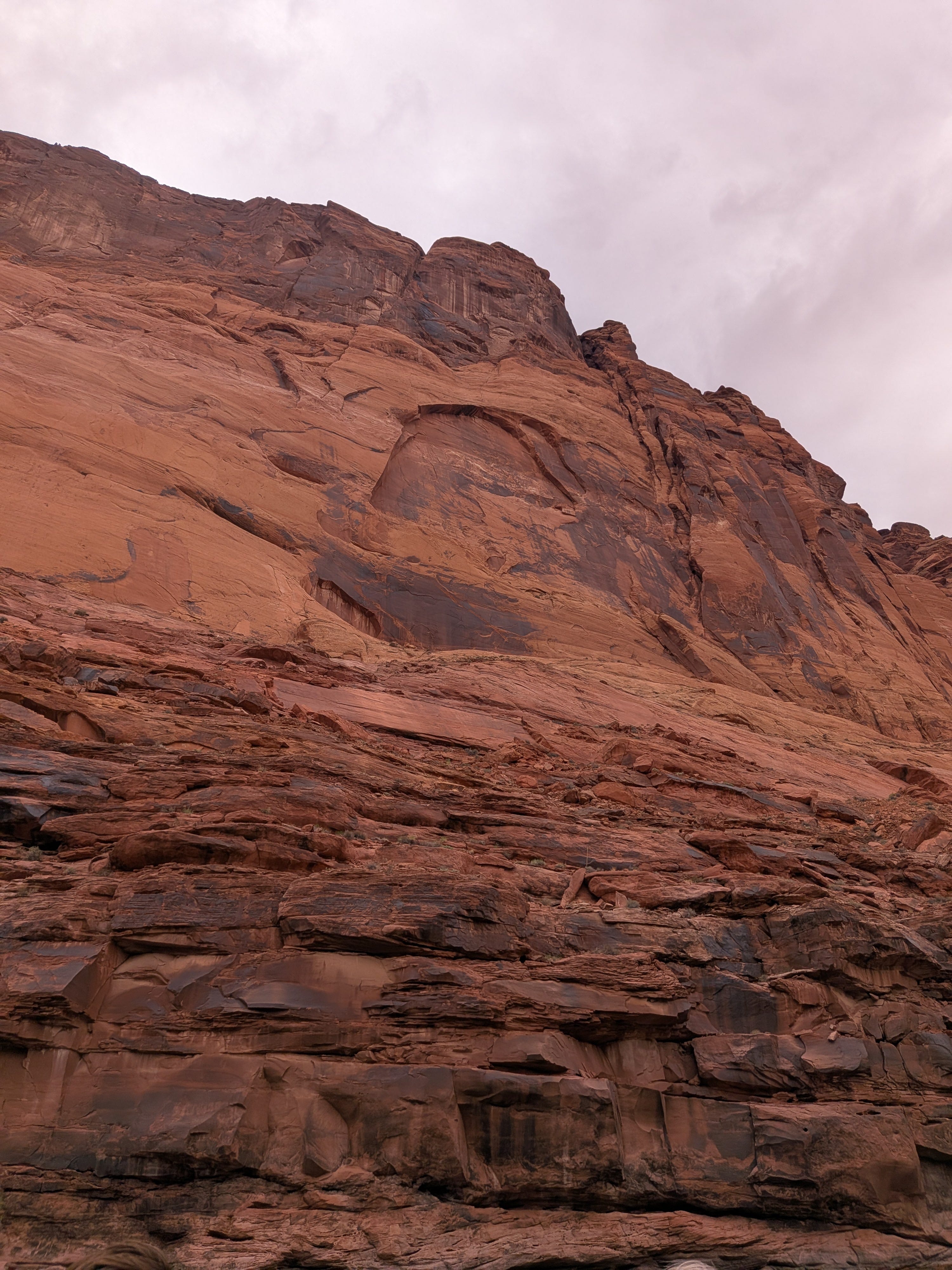
The story was about a terrifying red monster people claimed was roaming the deserts around Sedona, Arizona, in the late 1800s.
But the twist?
It may not have been a monster at all.
From what I remember, the “red monster” was actually a camel left behind from the U.S. Army Camel Corps experiment in 1857. The military had brought camels to the Southwest to see if they could be useful, but the plan didn’t work out. When they tried to gather the camels back up, one escaped.
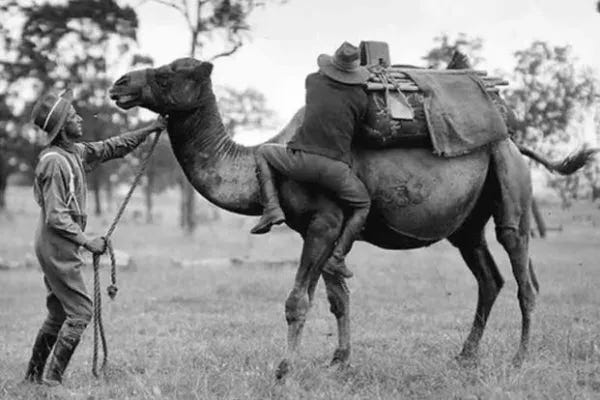
“When the rancher went out to examine the dead beast, he found strips of rawhide wound and twisted all over his back, his shoulders, and even under his tail.”
— New York Sun, early 1890s
And because camels are not native to Arizona, no one knew what they were looking at.
Imagine seeing a huge, strange creature moving through the red rocks, covered in red dust, with rope and bones tangled around it.
Of course people thought it was a monster.
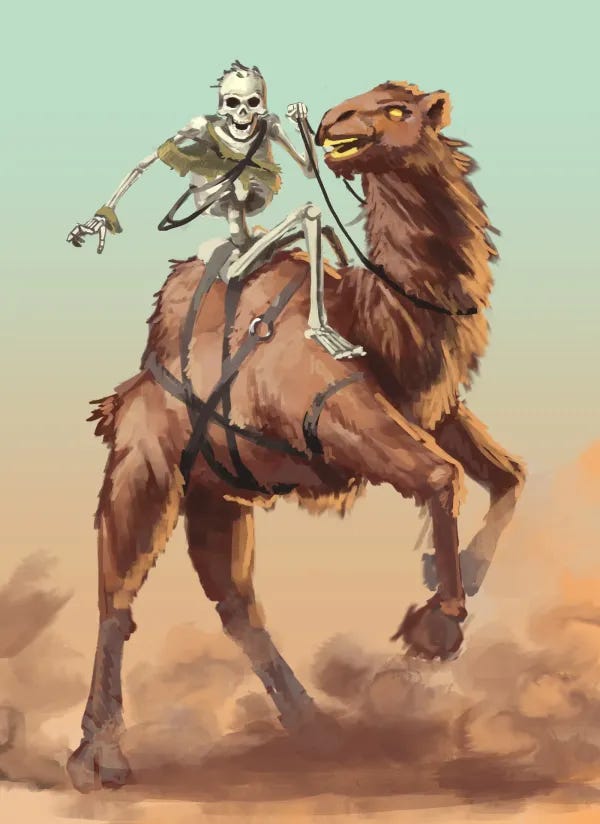
I mean… I would have.
This folktale immediately made me think: what if this became a middle-grade mystery?
A group of kids hear the legend of the Red Monster.
Everyone says it’s just an old story.
Then they find something hidden in a wall, a diary, or an old trunk that suggests the monster may have been real.
And maybe the real mystery isn’t the camel.
Maybe it’s what people were willing to hide.
I still need to fact-check the full story, especially the names, dates, exact location, and who eventually found or shot the camel. But I love the idea of taking a strange piece of Arizona folklore and turning it into a spooky, funny, dusty middle-grade adventure.
Because sometimes monsters are not monsters.
Sometimes they are misunderstood creatures.
Sometimes they are history covered in red sand.
And sometimes they are exactly the kind of weird story that makes a writer say:
“Well… now I need to know more.”
Would you read a middle grade mystery inspired by this legend?
Or better question:
If you saw a giant red “monster” in the desert, would you investigate it… or run the other way?
I know what the smart answer is.
I also know I’d probably follow it with a notebook and snacks, of course, plenty of water cuz it’s a desert out there!
Want to know more about this tale? Visit NickBrumbyWesterns.com for the full story and historical facts. He also writes western fiction if that’s your jam.
The Brave Conversation
These kind of stories gives us a way to talk about family secrets, grief, truth, and the stories people pass down.
Every family has stories.
Some are funny.
Some are sweet.
Some get told every holiday until everyone can recite them by heart.
And some stories are avoided.
Changed.
Softened.
Buried.
Books let us ask hard questions from a safe distance.
Who gets to tell the family story?
What happens when someone is left out of it?
When does protecting people from the truth become another kind of hurt?
And what do we do when the past asks to be heard?
So now I need to know:
Would you keep reading the diary?
Would you read about the Red Monster of Sedona?
Warmly,
Kim
P.S. Next time, we may be talking about whether you’d share the screenshot. One rumor, one phone, and one very messy choice.