
Blair Hanson’s For the Greatest Good is a YA novel with a powerful and timely premise: access to clean water should be a basic human right, but for too many communities, especially poor and overlooked ones, that right is not guaranteed. Published by Page Street YA, the book follows Gavin, a teen in Pondville, Arkansas, a town dealing with years of poor water quality and the looming fear that one burst pipe could take away safe drinking water for good. Gavin and his best friend MacKenzie are interning at town hall when they see a possible way to help their community: get grant money from CrispFlow, a notorious water company with a history of privatizing failing water systems and leaving towns worse off. There is just one problem. Gavin’s estranged father sits on CrispFlow’s board, and getting his help means stepping into some very questionable territory.
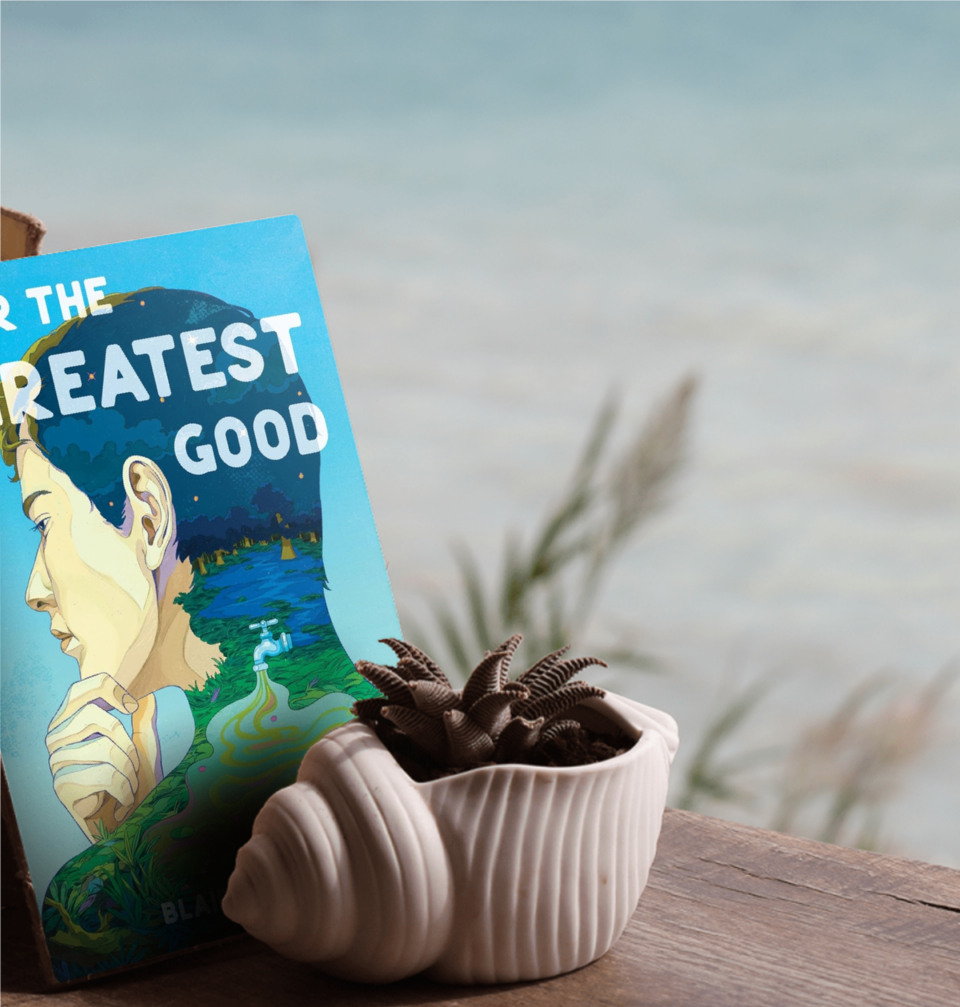
What I appreciated most about For the Greatest Good was the issue at the heart of the story. The book makes it clear that “moral victories” are not enough when people are living through a public health crisis. Pondville needs money, infrastructure, and real help. The story does a good job showing how environmental injustice affects poor communities and how those communities are often expected to simply endure problems that would be treated as emergencies elsewhere. The message is one of the strongest parts of the book: people should not have to leave the towns they love just to have clean, safe water.
I also really liked the way Pondville itself was portrayed. Small towns in YA books with queer characters are often shown only as hostile, judgmental, or religiously extreme places where LGBTQ+ people cannot safely belong. While that absolutely can be true in some communities, it is not the only reality. In this book, Pondville has a tight-knit feeling. People know each other, look out for each other, and have reasons for staying beyond simple stubbornness. There is a sense of community care that almost feels like found family, and I appreciated seeing that in a queer YA story.
One of the most effective parts of the book, for me, came in Chapter 3, when Gavin and MacKenzie interview a town resident about why she stays in Pondville. That scene added so much emotional context. It showed that leaving is not always easy, possible, or even fair. Poverty can keep people rooted in place, but love can too. Why should people have to abandon their homes, memories, neighbors, and history because the government and corporations have failed them? That scene helped make the stakes feel real and human. Honestly, I wish the book had opened closer to that moment.

Unfortunately, the first two chapters did not work well for me. I struggled to get into the story at the beginning, and I almost put the book down after Chapter 2. I kept reading because I had signed up for the tour with Toppling Stacks Tours, and I am glad I pushed through because the book does improve once the larger community issues come into focus. Still, the opening felt weaker than the premise deserved. Starting with the interview in Chapter 3 would have pulled me into Pondville’s crisis much faster and given me a stronger reason to care right away.
My biggest issue with the book was Gavin. I understood what he was trying to do, and I understood that desperation can make people justify bad choices. But I did not like him much as a character. He often came across as selfish and careless, especially when he was willing to hurt people to get what he wanted. The book wants Gavin’s choices to feel morally complicated, and they are, but I needed more emotional grounding to believe in how far he was willing to go.
That missing piece affected the story for me. I did not feel fully convinced that Gavin loved Pondville enough to risk everything for it. The book tells us the town matters, but I wanted to see more of how Pondville supported him as a gay teenager, how it made him feel safe, seen, or valued, and why saving it was worth conning his estranged father, manipulating the grant process, or risking serious consequences. There is one scene where Gavin is treated poorly in a nearby town because he is gay, which could have been a strong contrast, but I still needed more examples of Pondville actively being the place where he belongs.
The estranged father-son dynamic, however, was compelling. Gavin’s relationship with his father adds tension and emotional complexity to the plot. Their interactions are uncomfortable in a way that fits the story, because Gavin is not just trying to save his town; he is also dealing with unresolved family pain. I liked that this relationship was messy and transactional. It gave the book another layer beyond the political and environmental conflict.
Overall, For the Greatest Good has a strong message, an important topic, and a premise full of potential. I loved that it centered clean water access, public health, poverty, and queer representation in a small-town setting that was not reduced to stereotypes. But the uneven opening, my frustration with Gavin, and the lack of deeper emotional proof behind his devotion to Pondville kept this from being a stronger read for me.
This is a thoughtful YA novel with a lot to say, even if the execution did not fully convince me. Readers who enjoy morally complicated characters, political/social issue-driven fiction, small-town stories, and LGBTQ+ representation may find a lot to discuss here. For me, it lands at 3.5 stars: promising, important, and worth reading, but not without some holes.
Thank you to the author and Page Street YA for the ARC and my honest review. Toppling Stacks Tours sponsored this book tour.
About the book:
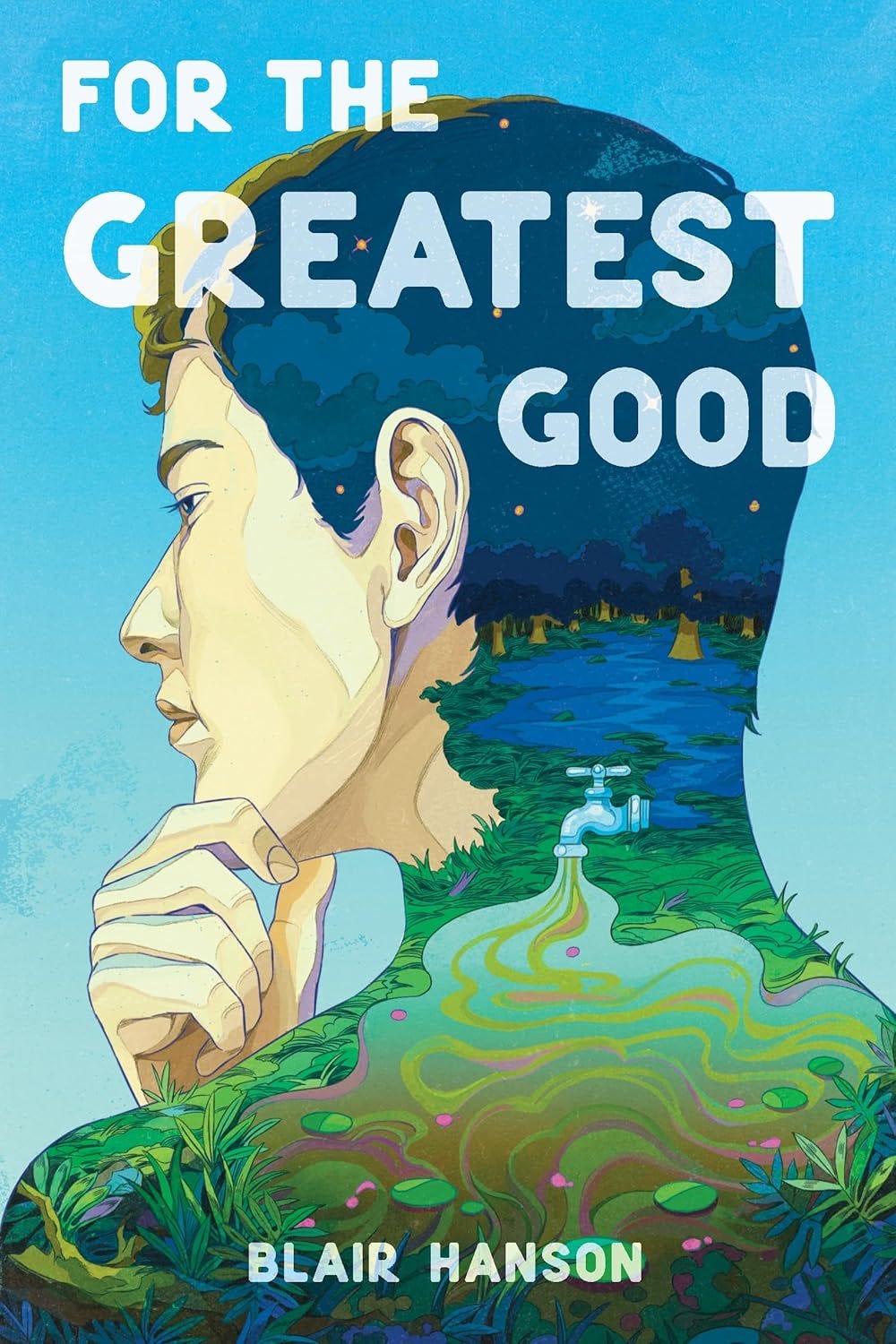
Genre: YA Contemporary
Publishing date: June 30, 2026
Goodreads | Amazon | Barnes & Noble | IndieBound
Rep: Gay, LGBT+
Synopsis:
Moral victories don’t solve public health crises. Money does.
After years of poor water quality, Gavin fears his town, Pondville, is one burst pipe away from losing access to safe drinking water forever.
Demoralized, Gavin and his best friend MacKenzie turn to his estranged father, a board member of the infamous water company CrispFlow. CrispFlow is known for giving out grants to improve public facilities, but they’ve also been buying and privatizing cities’ failing water systems, often leaving those towns’ situations worse than they found them. Gavin wouldn’t trust CrispFlow to privatize their water, but with his father on the board and Gavin and Mack interning at town hall, he might just be able to walk away with the grant money instead. Gavin’s dad agrees to rig the grant process if Gavin and MacKenzie sabotage the competition to help CrispFlow win an infrastructure bid. It’s not above board, but everybody wins, as long as no one gets caught . . .
Content Warning: Social injustice, estrangement of a parent
Meet the author:
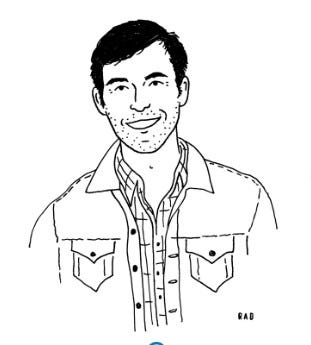
My name is Blair Hanson, and if it’s not already obvious, I am not an expert at building websites! I am much more passionate about writing contemporary young adult fiction. In my (mostly nonexistent) free time, I enjoy falling down Wikipedia wormholes and cuddling with the world’s most adorable cats.
My books include America’s Not-So-Sweetheart (June 17, 2025, Page Street YA) and the forthcoming For the Greatest Good (expected June 30, 2026, Page Street YA).