
The Brave Bookshelf Dispatch
Books, brave conversations, author news, writer advice, and one internet thing I’m probably overthinking.
Hi, Writer Friends,
I was working on an email recently to my fellow SCBWI writers, and it got me thinking about something I wanted to share with you.
Scammers are getting smarter. And with AI in the mix, they’re getting harder to spot.
Remember when scam emails were full of spelling mistakes, awkward sentences, and promises that some mysterious prince wanted to give you millions of dollars?
Those were almost easy to recognize.
Now? Not so much.

AI can help scammers write convincing emails, impersonate real people, create fake profiles, and even imitate someone’s voice.
And writers are particularly tempting targets.
Why? Because we’re always hoping to connect with readers, agents, publishers, reviewers, and people who might help our books find their way into the world.
Unfortunately, scammers know that, too.
An email claiming to be from a literary agent who loves your book? Exciting!
A publisher offering an incredible opportunity? Even better!
Someone offering to promote your book to thousands of readers?
Well, that sounds pretty good, doesn’t it?
But sometimes, the opportunity isn’t real.
And when someone knows exactly what you’ve been hoping for, it can be hard to recognize the warning signs.
A few ways to protect yourself
I’ve been thinking about what writers can do to protect themselves without becoming suspicious of everyone who reaches out.
Here are some habits worth adopting:
1. Check who is actually contacting you.
Someone can claim to represent a well-known publisher or literary agency without having any connection to them.
Look closely at the sender’s email address, including the domain after the @ symbol.
Better yet, visit the organization’s official website yourself and contact them using information you find there.
Don’t rely solely on the links or phone numbers in the suspicious message.
2. Be wary of unexpected fees.
Legitimate literary agents generally earn commissions when they sell your work. They don’t charge reading fees for considering a manuscript.
Be especially cautious when someone promises publication, representation, reviews, or impressive book sales in exchange for a surprise payment.
Some legitimate publishing and promotional services do charge fees, but you should always research who you’re paying and what you’re purchasing.
3. Don’t let urgency make the decision for you.
“This opportunity expires today!”
“You need to pay immediately!”
“We’ve selected your book, but you must act now!”
Sound familiar?
Pressure is a common scam tactic.
A genuine business opportunity should allow you time to ask questions, verify information, and read an agreement before sending money.
4. Remember that a convincing message isn’t proof.
AI makes it easier to produce polished emails, convincing images, fake testimonials, and even cloned voices.
If someone claims to be an agent, editor, publisher, or someone you know, verify their identity through another trusted channel.
Even a familiar voice isn’t enough anymore.
5. Protect your accounts and personal information.
Use unique passwords and turn on multifactor authentication for your email, social accounts, and publishing platforms.
Be careful about opening unexpected attachments or sharing banking details, login codes, identification documents, or unpublished manuscripts with unverified contacts.
6. Talk to another writer before committing.
Sometimes we’re too close to an opportunity to see the warning signs.
Ask a trusted writer friend what they think.
And don’t feel embarrassed if you’ve nearly fallen for something. These schemes are created to fool people.
Where to find more information
A few resources worth bookmarking:
Writer Beware:
Warnings about publishing scams, questionable services, and schemes aimed at authors.
Federal Trade Commission:
Advice on spotting scams and protecting yourself.
FBI Internet Crime Complaint Center:
Information about internet crime and a place to report suspected online fraud.
If you receive something suspicious, save the message, avoid clicking its links, and verify the sender independently.
And if you’ve already sent money or shared sensitive information, contact your bank or account provider promptly and report what happened.
One more thing...
I don’t want us to stop being excited when someone expresses interest in our writing.
We work too hard for that.
I just want us to remember that we can be hopeful and cautious at the same time.
You deserve genuine opportunities, people who respect your work, and the chance to pursue your writing dreams without someone trying to take advantage of them.
Keep writing bravely.
And watch out for one another.
📚 What I’m Reading: “Sirens Kiss” by Leslie Vedder
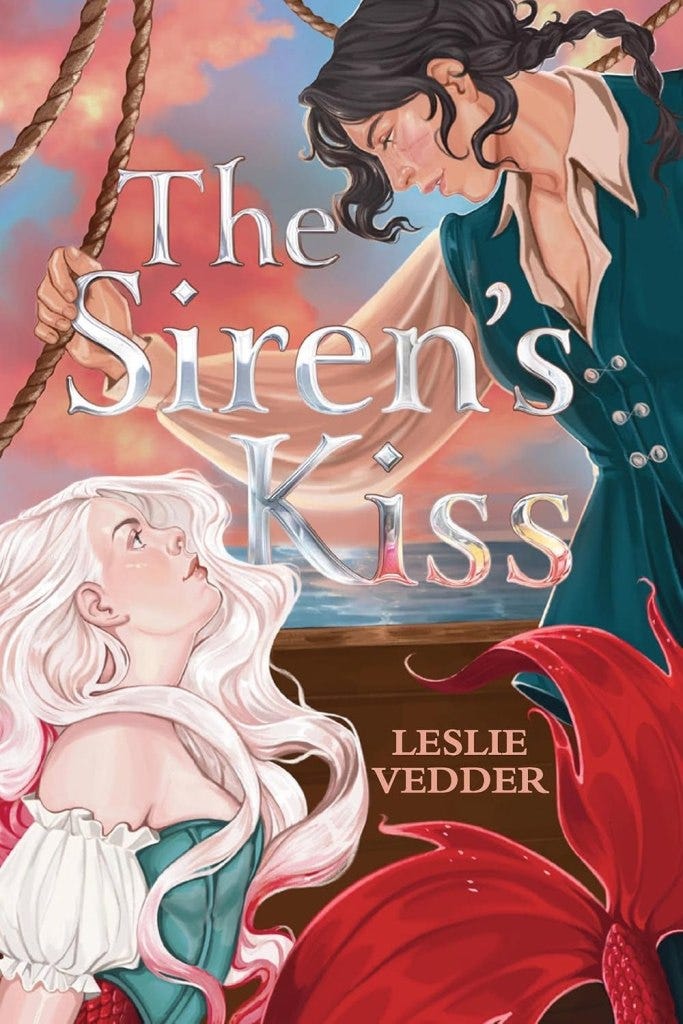
Pirates, mermaids, curses, sea monsters, stolen hearts, and a Sapphic romance? This one has quite the combination!
Described as Pirates of the Caribbean meets The Little Mermaid, this fantasy follows Rayleigh, an eighteen-year-old pirate captain bound to a cursed ship after stealing a legendary ruby.
Her chance at freedom involves retrieving a stolen heart from the Sea Witch.
But she’s not the only one searching for something.
Maren, a fiery mermaid, is determined to rescue her brother and protect the remaining mermaids.
When these two cross paths, their plans—and possibly their hearts—get tangled together.
With pirate kings, ancient grudges, dangerous seas, and a romance that could change everything, this sounds like quite an adventure.
Sometimes it’s nice to escape into a world where the biggest problem is a sea god with a grudge!
Read my 5 Reasons to Read Siren’s Kiss and get a copy for yourself!

Your turn!
Have you ever received a suspicious message about your writing or your books?
I’d love to hear about it. You can hit reply and tell me what made you suspicious—just leave out any personal information.
Your experience might help another writer recognize a scam before it’s too late.
Until next time, keep writing and keep being brave.
Kim Bartosch
The Brave Dispatch | YA Author | Book Influencer
PS. Next time, we’ll talk about whether you would open the locked locker.
Scenario: A locker that supposedly belonged to a student who vanished suddenly opens—and your name is written inside.