
Anna-Marie McLemore’s We Could Be Anyone is a YA historical fiction novel full of glamour, deception, mystery, and complicated sibling dynamics. Set during Hollywood’s Golden Age, the story follows Lola and Lisandro, two Latine queer siblings who are actors, but not in the traditional silver-screen sense. Instead of starring in films, they use their talents to scam the wealthy out of their money.
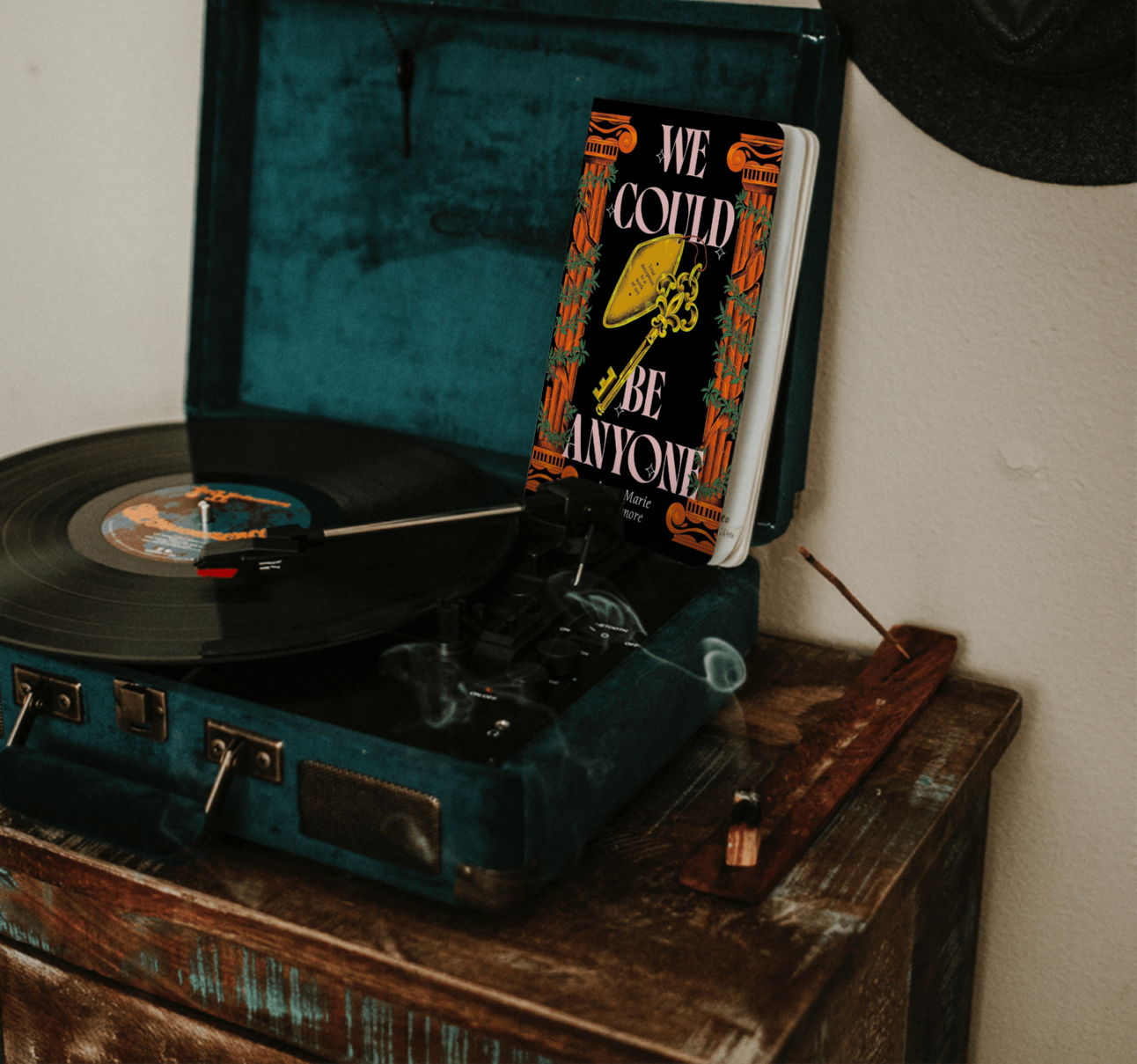
Their con is clever: Lola plays a tragic ghost haunting the mansions of the rich, while Lisandro takes on the role of the brave spiritualist who can help the restless spirit find peace. For the right price, of course. When they set their sights on The Coterie, the grand estate of newspaper tycoon Bixby Fairfax and his famous mistress Blythe Bell, the siblings know this could be the job that changes everything. A payout this big could finally give them a way out of the Midwest and into a life that feels more like freedom.
But this con comes with a twist. For the first time, Lola and Lisandro have to switch roles. Lola steps into the role of the medium Katrina, while Lisandro becomes the ghostly presence haunting the mansion. As they settle into The Coterie and begin working their act, strange things start happening that even they cannot explain. The deeper they go, the more the estate’s glittering surface begins to feel unstable, and the question becomes whether they can pull off the performance or whether this will be their final act.
One of my favorite parts of We Could Be Anyone was definitely the con itself. I loved seeing how Lola and Lisandro planned their performances, built their roles, and used theatrical tricks to manipulate the wealthy people around them. There is something so fun about a story centered on performers who are not just pretending for applause, but pretending for survival. Their scam has just enough theatrical flair to make it entertaining, and I enjoyed learning how they pulled off the “haunting” and spiritualist routine.
The premise is easily one of the strongest parts of the book. Two siblings using ghostly illusions and fake séances to scam rich people during Hollywood’s Golden Age? That is a fantastic setup. It has drama, style, danger, and a little bit of gothic weirdness. The Coterie itself also adds a lot of atmosphere. McLemore does a lovely job describing the mansion, the clothing, and the overall feeling of wealth and performance. The dresses Lola wears, especially when she is impersonating the medium Katrina, are easy to picture. The descriptions are lush without feeling overwhelming, and they help create that sense of old Hollywood glamour mixed with something darker hiding underneath.
I also really enjoyed the mystery and intrigue surrounding the characters. There is a lot of tension built around who everyone truly is versus who they are pretending to be. That fits beautifully with the book’s larger themes of identity, performance, and survival. Lola and Lisandro are constantly putting on masks, but they are not the only ones. The people inside The Coterie have secrets of their own, and that kept me turning the pages. Even when I was frustrated, I still wanted to know what was really going on.
That said, this was a three-star read for me because there were a few things that kept pulling me out of the story. My biggest issue was the dual point of view. Lola and Lisandro’s chapters sounded way too similar. I would be reading from Lola’s point of view, get up to do something, come back, and then have to double-check whose chapter I was in because the voices blended together so much. At first, I wondered if this was intentional. Since the book is so focused on performance, identity, and role-switching, I thought maybe the similar voices were building toward some kind of twist or reveal. But that twist never came.
Because of that, the POVs ended up feeling more confusing than meaningful. In a story about two siblings with different desires, different frustrations, and different relationships to the con, I wanted their voices to feel more distinct. I wanted to immediately know when I was in Lola’s head versus Lisandro’s. Instead, they often felt like the same person narrating slightly different scenes, and that made it harder for me to fully connect with either of them.
My other major frustration was the setting, specifically the lack of clarity around when and where the story takes place. The book is set during Hollywood’s Golden Age, but that period covers a wide span of time, roughly from the late 1920s into the 1960s. While I picked up on a few hints that made me think the story might be set in the 1920s or 1930s, such as the mention of a drink like “The Bee’s Knees”, I never felt fully grounded in the time period. The ghostly special effects used in the con also felt fairly rudimentary, almost Scooby-Doo-like, which made me wonder if maybe the story was set in the 1930s or 1940s. Then Lisandro’s longing to leave the Midwest and find a queer community in the city made me think perhaps the story was leaning more toward the 1940s or 1950s.
I found that lack of specificity frustrating. Historical fiction does not always need to spell out every single date, but I do need enough detail to feel anchored. Here, I kept asking myself: What year are we in? Where in the Midwest are we? What is the larger world around these characters like? Without a clearer sense of time and place, the historical setting felt blurry. For a book so rich in visual description, I wanted that same richness applied to the historical backdrop.
Still, We Could Be Anyone has a lot going for it. The mystery kept me reading, the con was entertaining, and the atmosphere had moments that really worked for me. McLemore’s descriptions of The Coterie, the costumes, and the performance elements were beautiful, and the premise had so much potential. I especially appreciated the queer and Latine representation woven into a story about survival, reinvention, and the desire to escape into a better life.
Overall, We Could Be Anyone is a stylish and intriguing YA historical fiction novel with a fantastic setup, but it did not fully come together for me. I loved the con, the mystery, and the glamorous descriptions, but the similar character voices and unclear historical setting made the reading experience more confusing than I wanted it to be. For readers who enjoy atmospheric stories about deception, identity, and old Hollywood-inspired drama, this may still be worth picking up. For me, it landed at a solid three stars.
Final Rating: ⭐⭐⭐ / 5
About the book:
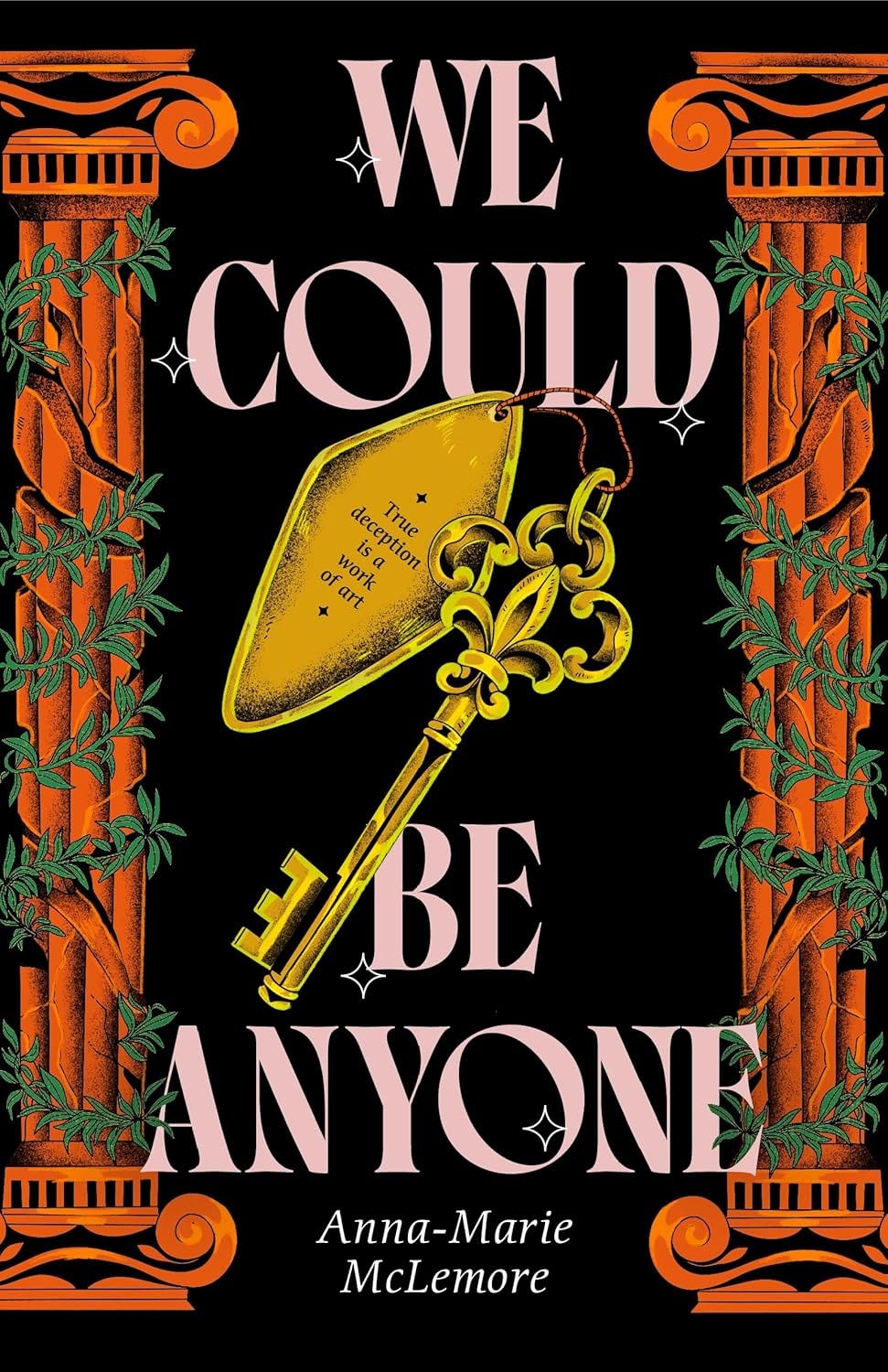
Genre: YA Historical Fiction
Publishing date: May 26, 2026
Goodreads | Amazon | Barnes & Noble | IndieBound
Rep: Queer, Latine, LGBT+
Synopsis:
True deception is a work of art.
Lola and Lisandro are actors during Hollywood’s Golden Age, but you won’t see them on any silver screen. Instead, these siblings use their talents to scam the rich and famous out of their ill-begotten cash. They have their act down to a science: Lola plays the tragic ghost who haunts the mansions of the wealthy, and Lisandro plays the brave spiritualist who will help her soul find peace. For a small fee, of course.
The siblings have their sights set on their next target: The Coterie, the opulent estate of newspaper tycoon Bixby Fairfax and his famous mistress Blythe Bell. A score this big will allow them to move… well, anywhere but here. But this job requires them to do something they’ve never done before: switch roles. And as strange things keep happening at The Coterie… things that even Lola and Lisandro can’t explain.
As they are drawn deeper into The Coterie’s gleaming façade and tensions rise between brother and sister, one question looms over them. Will they be able to pull off their act? Or will this be their last performance?
Meet the author:

Anna-Marie McLemore (they/them) is the author of William C. Morris Debut Award Finalist The Weight of Feathers; Wild Beauty; Blanca & Roja, one of Time Magazine’s 100 Best Fantasy Novels of All Time; Indie Next List title Dark and Deepest Red; Lakelore, an NECBA Windows & Mirrors title; Venom & Vow, co-authored with Elliott McLemore; Flawless Girls; and National Book Award longlist selections When the Moon Was Ours, which was also a Stonewall Honor Book; The Mirror Season; and Self-Made Boys: A Great Gatsby Remix. Their latest release is their adult debut, The Influencers, and their next young adult novel is “We Could Be Anyone”, forthcoming in spring 2026.