
“The first thing you need to know: They’re not antiques.
The second thing you need to know: I’m not his daughter.”
That opening immediately made me curious, and The Antique Picker’s Daughter wastes very little time pulling the reader into Frankie’s unstable and increasingly dangerous world.
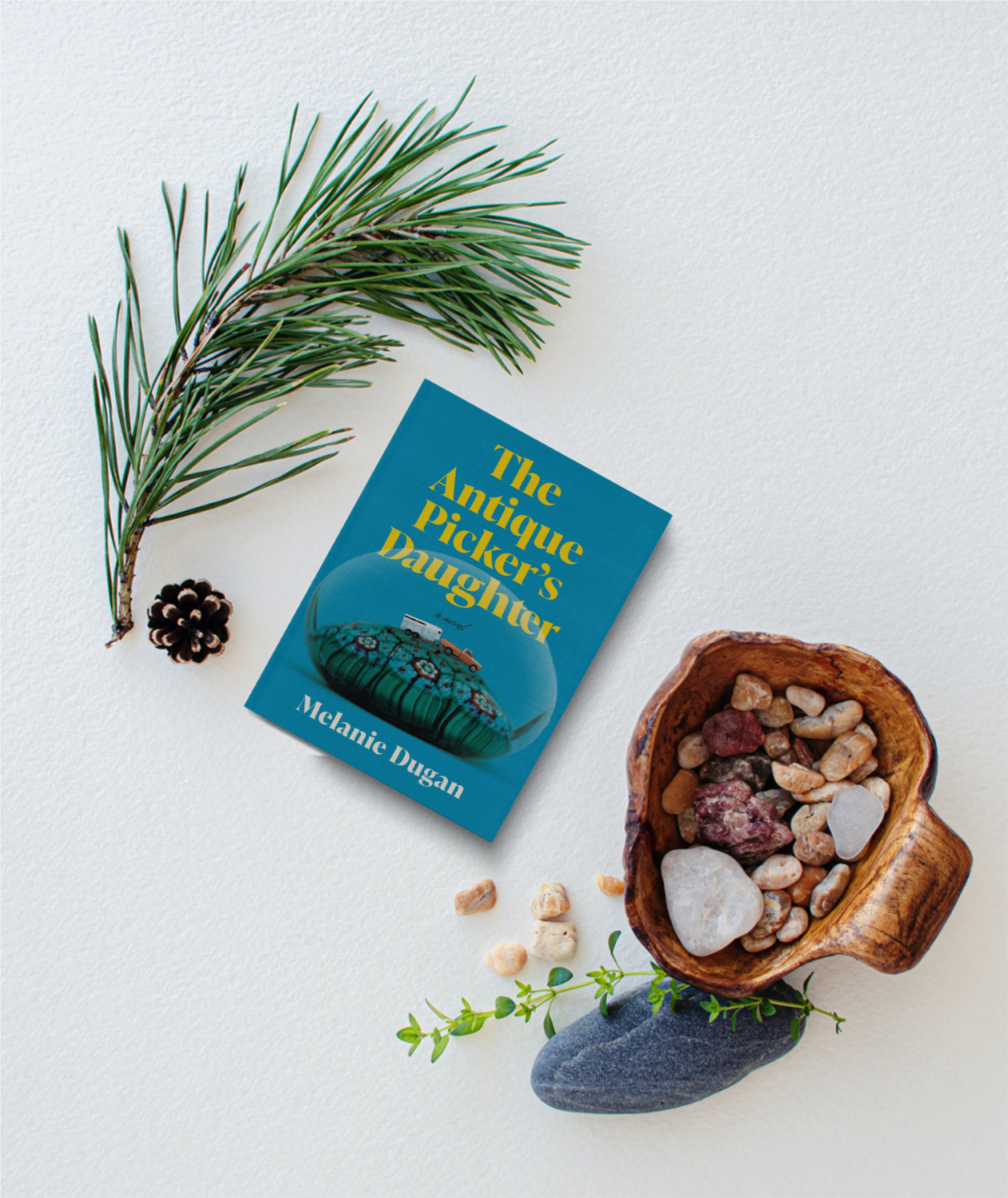
Melanie Dugan’s novel is a short, fast read, but it tackles some very heavy subjects, including youth homelessness, abuse, exploitation, and human trafficking.
Frankie has already been abandoned by both of her parents when she is left in the care of her deeply religious grandmother. When her grandmother’s beliefs become increasingly extreme, Frankie runs away. She ends up on the streets of Toronto, where surviving becomes even more difficult as winter approaches.
Then she meets Francis, a much older man who teaches her what he calls “the game”—finding, buying, stealing, and reselling items for profit. The two begin traveling through small towns and villages in southern Ontario, and for a while they form an unusual team.
But Frankie’s safety is always fragile, and when Francis leaves her behind in a town she doesn’t know, the danger surrounding her becomes much more serious.
What I liked 😁
One of the strongest things about this book is its pacing.
There is almost no warm-up period. Dugan gets Frankie out of her grandmother’s house and into survival mode quickly, and from there the story keeps moving. At only 250 pages, this is the kind of book where you tell yourself, “I’ll read a few chapters,” and suddenly realize you’ve read half the book.
I also really enjoyed the mystery surrounding the characters.
Frankie is telling the story, but that doesn’t mean we know everything about her. She holds things back, and so do the people around her. There is always this feeling that someone knows more than they are saying.
Francis especially interested me because his relationship with Frankie is complicated from the beginning. There are moments when he seems protective, moments when the power imbalance between them is impossible to ignore, and moments when I wasn’t sure what to believe about him at all.
That uncertainty worked for me.
Actually, I wish the novel had explored Frankie and Francis’s relationship even more because it became one of the most interesting parts of the story.

Thank you to the author and publisher for the book and my honest review.
This book tour is sponsored by iRead Book Tours.
What Didn’t Work for Me 🙄
My biggest issue, however, was Frankie’s emotional voice.
Terrible things happen to her—things that should be frightening, painful, enraging, or devastating—but Frankie often narrates them with almost the same emotional weight she might use to describe an everyday inconvenience.
At times, I felt like I was being told about something horrifying without being allowed to feel how horrifying it was to her.
To be clear, emotional numbness can absolutely be part of how someone copes with trauma, and Frankie’s detachment may have been intentional. But as a reader, I needed more from the writing to understand that detachment.
I wanted glimpses of what was happening underneath it.
Was she terrified but refusing to admit it? Angry but shutting it down? Dissociating? Trying not to think about what had happened? Even physical reactions, intrusive thoughts, or small cracks in her emotional armor could have helped me connect more deeply with her.
Instead, there were moments involving sexual exploitation and violence where Frankie’s narration felt so matter-of-fact that I became distanced from her rather than pulled closer to her.
The events themselves are upsetting. Frankie’s reaction to them, however, sometimes felt like the emotional volume had been turned down too far.
And considering this is a first-person narrative, I really wanted to be inside her experience.
I also had a couple of questions that never completely went away.
Frankie initially leaves her grandmother with the idea of finding her mother, yet that motivation seems to fade as the story continues. I kept expecting her search for her mother to become important again, so I was disappointed that this thread didn’t feel as developed as I expected.
I was also unsure when the novel was supposed to take place.
Something about the atmosphere, the way Frankie moves through the world, and the overall texture of the story made me picture an earlier period—possibly the 1970s or 1980s—but I never felt certain.
If the time period was stated clearly, I missed it.
A few stronger details anchoring the story in a specific decade would have helped me visualize Frankie’s world and better understand some of the circumstances surrounding her.
In Conclusion
Despite those issues, The Antique Picker’s Daughter was difficult to put down.
And that creates an interesting contradiction with my criticism of Frankie’s emotional distance: I didn’t always feel as connected to Frankie’s inner life as I wanted to be, yet I still needed to know what was going to happen to her.
The situations she faces are disturbing, and some sections are genuinely hard to read because of the realities of homelessness, exploitation, and human trafficking.
Dugan also succeeds at showing how quickly a vulnerable young person can move from one unsafe situation into another.
Frankie is constantly looking for stability, but stability keeps shifting underneath her. A person who seems helpful can become dangerous. A place that seems safer can reveal another threat. A decision that appears to offer an escape can lead straight into another trap.
That uncertainty gives the novel much of its tension.
Overall, The Antique Picker’s Daughter is a compelling and unsettling story with strong pacing, an intriguing sense of mystery, and a main character whose journey kept me reading.
I wanted more emotional depth from Frankie, more development of her complicated relationship with Francis, and clearer follow-through on a few story details—especially her original desire to find her mother and the novel’s time period.
Still, this is a quick, memorable read that tackles some incredibly difficult subjects and doesn’t waste time getting to the heart of Frankie’s struggle for survival and safety.
Final Rating: ⭐⭐⭐½ — 3.5/5 stars
About the book:
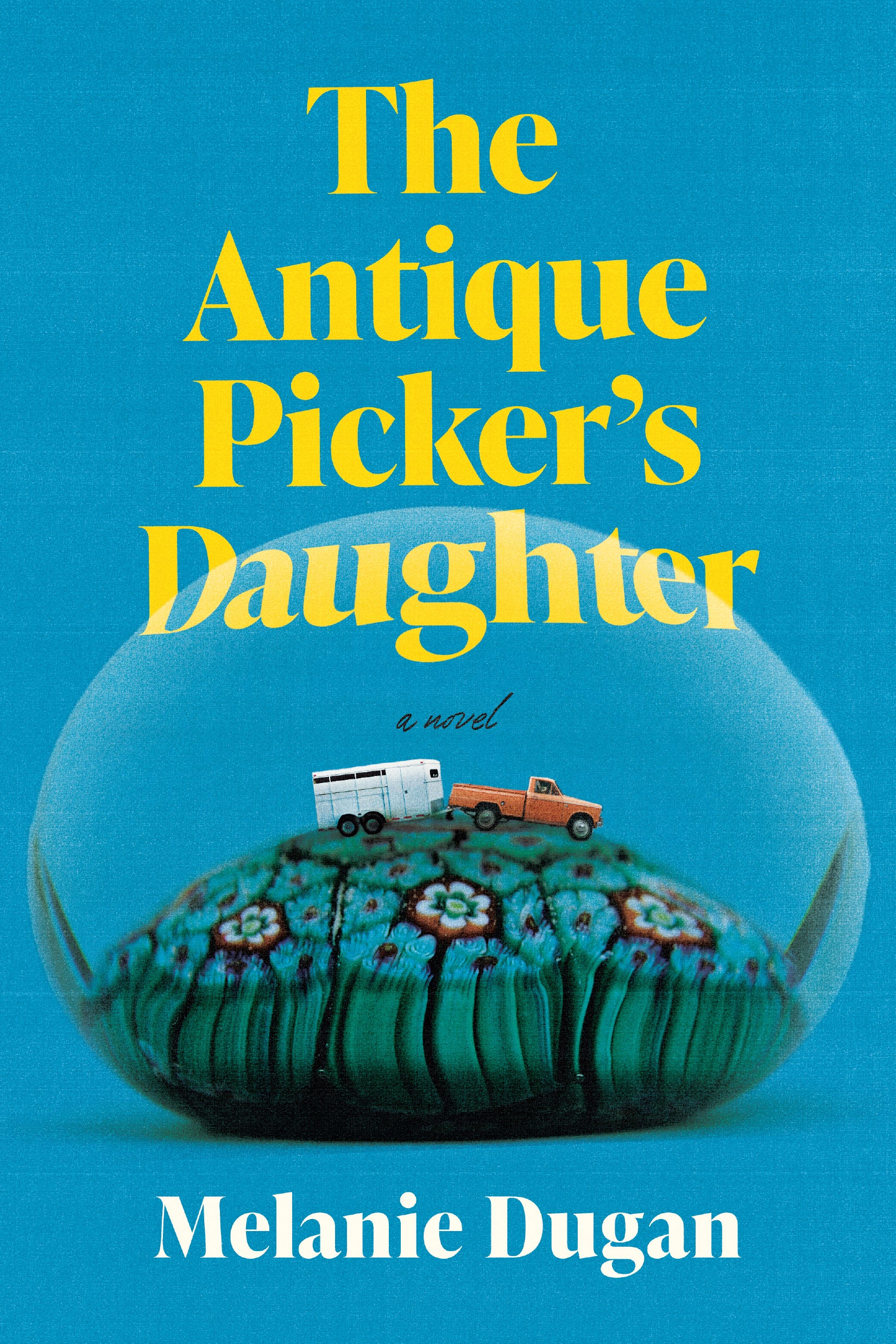
Publisher: Inanna Publications & Education Inc.
Release Date: September 2026
Genre: General Fiction / Literary Fiction
Synopsis:
“The first thing you need to know: They’re not antiques.
The second thing you need to know: I’m not his daughter.”
Abandoned first by her father, and then by her mother, Frankie has been left in the care of her deeply religious grandmother. When her grandmother’s religious convictions tip into delusion, Frankie decides to run away.
Life on the street in Toronto is hard, and with winter coming, it gets tougher. This is when Frankie first meets Francis, a man old enough to be her father. He starts training her in “the game,” as she comes to call it; buying, stealing, and reselling “inventory” at inflated prices. Through winter, spring, and early summer, the two become a team, traveling around small towns and villages in southern Ontario.
As Frankie discovers, life on the road holds dangers she can’t anticipate, and her precarious world tips into disaster when Francis abandons her in an unfamiliar town. Betrayed, alone, and deserted, Frankie realizes she’s in a dangerous situation — will she be able to find her way out on her own?
The Antique Picker’s Daughter explores youth homelessness, human trafficking, and one young woman’s search for safety.
Content Warning: Youth homelessness, human trafficking, physical abuse, sexual exploitation, and rough language.
BUY THE BOOK:
INANNA
Amazon ~ B&N
Indigo
add to goodreads
Meet the author:

Melanie Dugan is the author of Sometime Daughter (“A stunning debut,” The Kingston Whig-Standard), Revising Romance (“…heartwarming, amusing, and…downright sexy,” Midwestern Book Review), Dead Beautiful (“Artful and funny,” Kathryn Kuitenbrouwer), Bee Summers (“…a carefully wrought portrayal of the way we carry trauma with us through life,” Brenda Schmidt, Quill & Quire), and Hard White (“It is a very compelling and beautifully-crafted story…I highly recommend it,” Skeleton Press).
She lived in Boston, Toronto and London, England, before settling in Kingston, Ontario, where she now lives.
She has worked in libraries and bookstores, and was Associate Publisher at Quarry Press in Kingston, and also served as Managing Editor for Poetry Canada, Quarry Magazine and Canadian Fiction Magazine.
In 2009 she was promotions director for the inaugural Kingston WritersFest.
She has studied writing with Leon Rooke, Keath Fraser, Kim Moritsugu, Helen Humphreys and Anita Rau Badami.
Her short stories have been shortlisted for several awards including the CBC Literary Award.
Connect with the author: website ~ facebook ~ goodreads